Foolproof Cheesecake Bread

If you’ve been hunting for a cheesecake bread recipe that actually holds its swirl instead of collapsing into a wet, gummy center, you’re not alone — that was my exact problem for three loaves straight. The cream cheese layer would sink to the bottom, or the middle would stay raw while the edges browned. I tested this four times, changing the cream cheese temperature and the swirl depth each round, until I found the combination that gives you a clean marbled ribbon and a fully set center every time.
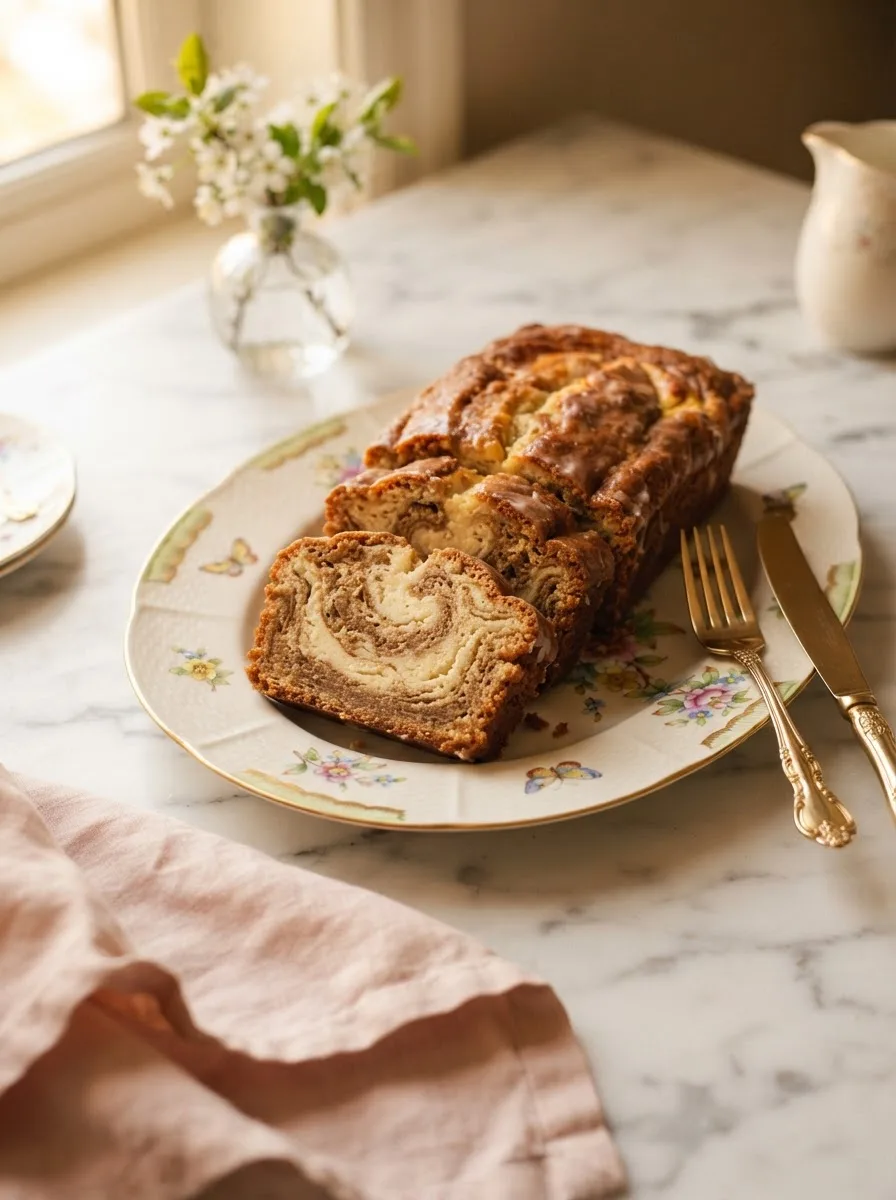
The fix ended up being smaller than I expected: a spoonful of flour in the cheesecake layer, and swirling it while the batter is still cool, not soft. That’s it. That’s the whole trick.
What you end up with is a loaf that looks like it came from a bakery case: a buttery vanilla crumb wrapped around a real cheesecake ribbon, with a graham cracker crumble baked into the top for that unmistakable cheesecake-crust flavor in every bite. It slices clean. It doesn’t weep. And it tastes like cheesecake and pound cake had a very good idea together.
★★★★★ “I made this for a bake sale and three separate people asked if it came from a bakery. The graham topping is what sold it.” — Priya, recipe tester (pre-launch)
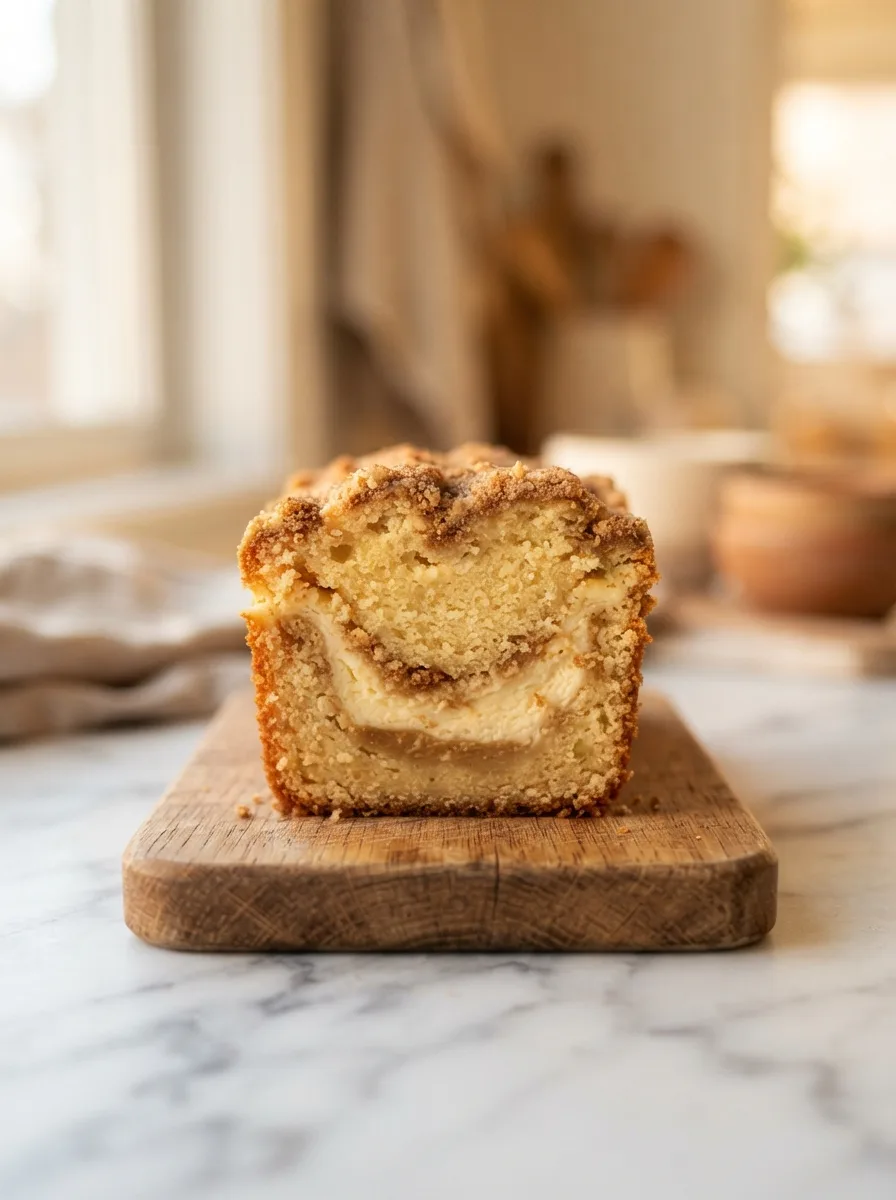
Why You’ll Love This Cheesecake Bread
- A real cheesecake layer, not a hint of one: Most “cheesecake bread” recipes just add cream cheese to the batter. This one bakes an actual cheesecake filling — sugar, egg, vanilla, and all — and swirls it through.
- The center sets clean: I tested this four times specifically to fix the sunken, wet-middle problem. A tablespoon of flour in the cheesecake layer stabilizes it so it bakes through with the bread instead of sinking under it.
- Graham crumble on top: A simple graham-butter-sugar topping bakes into a crackly crust that tastes like the bottom of a cheesecake, flipped to the top.
- One bowl for the batter, one bowl for the filling: No stand mixer required — a hand mixer or a sturdy whisk gets you there.
Key Ingredients for This Cheesecake Bread Recipe
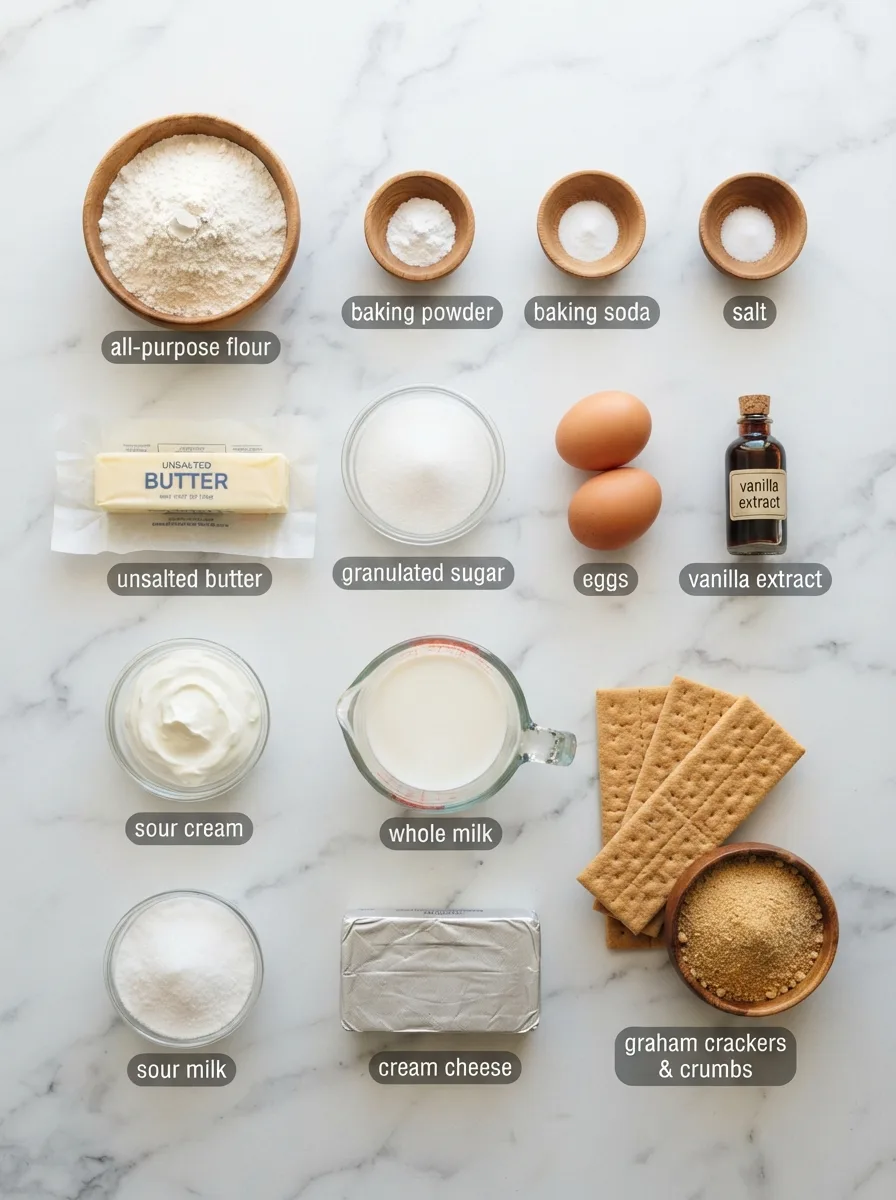
Full-fat cream cheese (8 oz). Room temperature, full-fat, block-style — not the whipped tub kind. Cold cream cheese leaves lumps you can’t beat out, and the whipped version has too much air to set properly in the oven.
Sour cream (½ cup). This is what keeps the bread portion tender instead of dense. Plain full-fat Greek yogurt works as a 1:1 swap if that’s what you have.
A tablespoon of flour in the cheesecake layer. This is the fix that took me three failed loaves to find. Without it, the cheesecake layer is too loose and sinks straight to the bottom of the pan during baking. With it, the layer holds its position and slices cleanly.
Graham cracker crumbs (⅓ cup). For the topping. You can crush whole graham crackers in a zip-top bag with a rolling pin if you don’t have pre-crushed crumbs on hand.
Ingredient Note: Bring the cream cheese, butter, eggs, sour cream, and milk to true room temperature before you start — about 1 hour on the counter. Cold ingredients are the single most common reason this recipe (or any swirled quick bread) turns out streaky instead of marbled.
Equipment You’ll Need
- 9×5-inch loaf pan — Metal conducts heat more evenly than glass here; if you only have glass, add 5–10 minutes to the bake time.
- Hand mixer or stand mixer — For creaming the butter and beating the cheesecake layer smooth. A sturdy whisk and some arm strength work too.
- Two mixing bowls — One for the bread batter, one for the cheesecake layer.
- A butter knife or skewer — For swirling the layers together without overmixing them into one flat color.
Controlling the Swirl (A Controlled Test)
The single biggest variable in this cheesecake bread recipe is the temperature of the cheesecake layer when you swirl it. I tested three versions side by side: swirled while warm and loose, swirled cold and thick, and layered flat with no swirl at all.
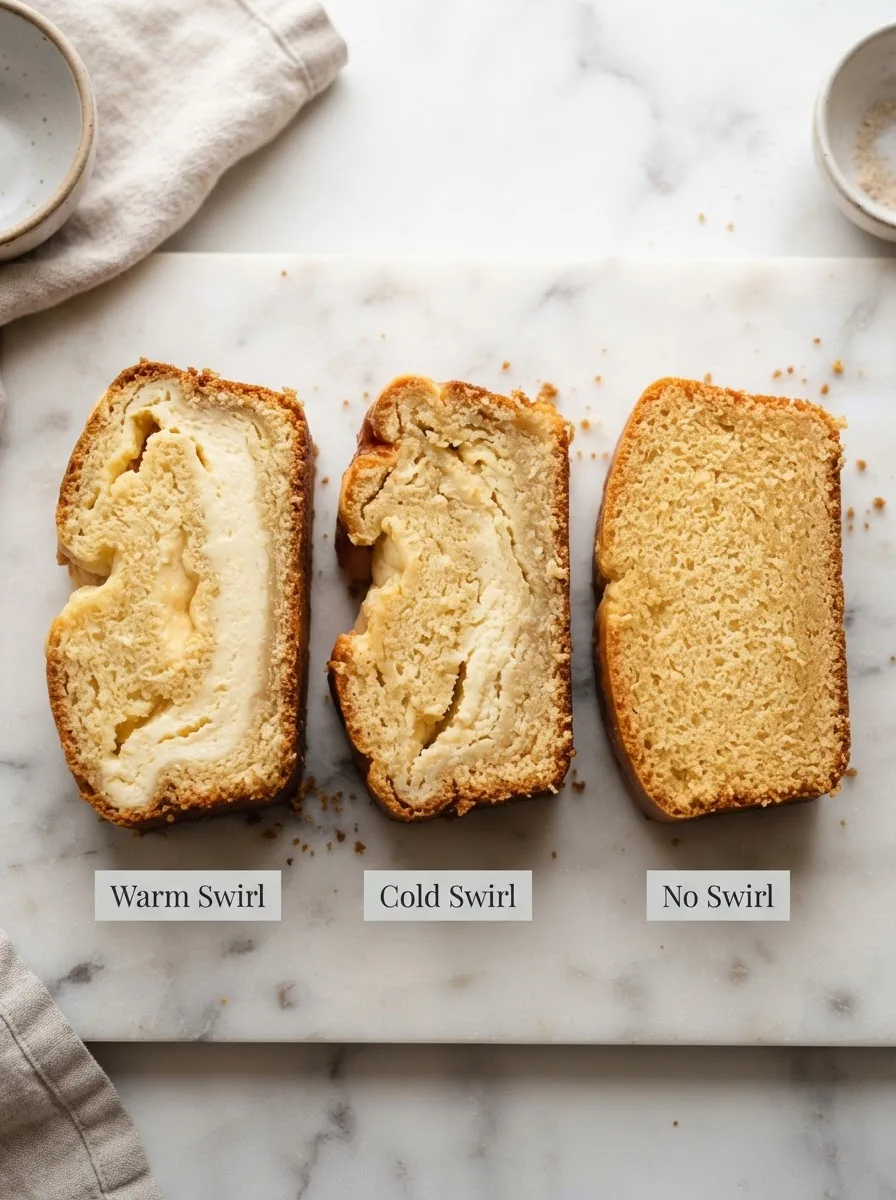
Warm swirl sank almost entirely to the bottom third of the loaf — pretty on top, but the bottom was dense and wet. No swirl (just layered flat) baked evenly but lost the marbled look entirely; it tasted right but wasn’t the cheesecake bread I was after visually. Cold swirl — chilling the cheesecake layer for 10 minutes before swirling it through slightly firmer batter — held its ribbon shape top to bottom and set cleanly. That’s the method in the recipe card below.
How to Make Cheesecake Bread
Before you start: Preheat your oven to 350°F (175°C) and grease a 9×5-inch loaf pan. Make sure your cream cheese, butter, eggs, sour cream, and milk are at true room temperature — this affects both texture and how well the swirl holds.
Step 1 — Make the cheesecake layer
Beat the softened cream cheese and sugar together until completely smooth with no lumps, about 2 minutes. Add the egg, vanilla, and the tablespoon of flour, and beat just until combined. Set the bowl in the fridge while you make the batter — this 10-minute chill is what keeps the layer from sinking.
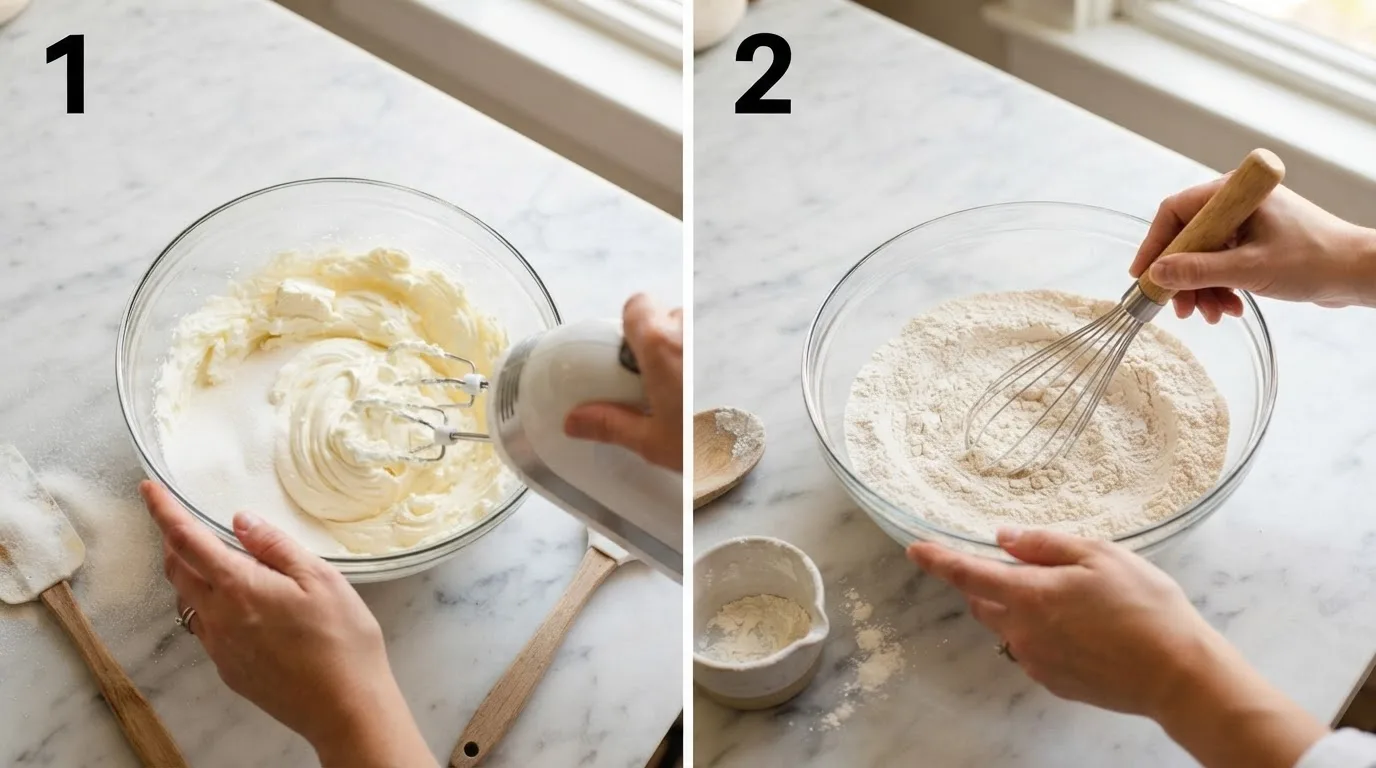
Step 2 — Whisk the dry ingredients
In a separate bowl, whisk together the flour, baking powder, baking soda, and salt. Set aside. This keeps the leavening evenly distributed so you don’t get a bitter pocket from unmixed baking soda.
Step 3 — Cream the butter and sugar, then build the batter
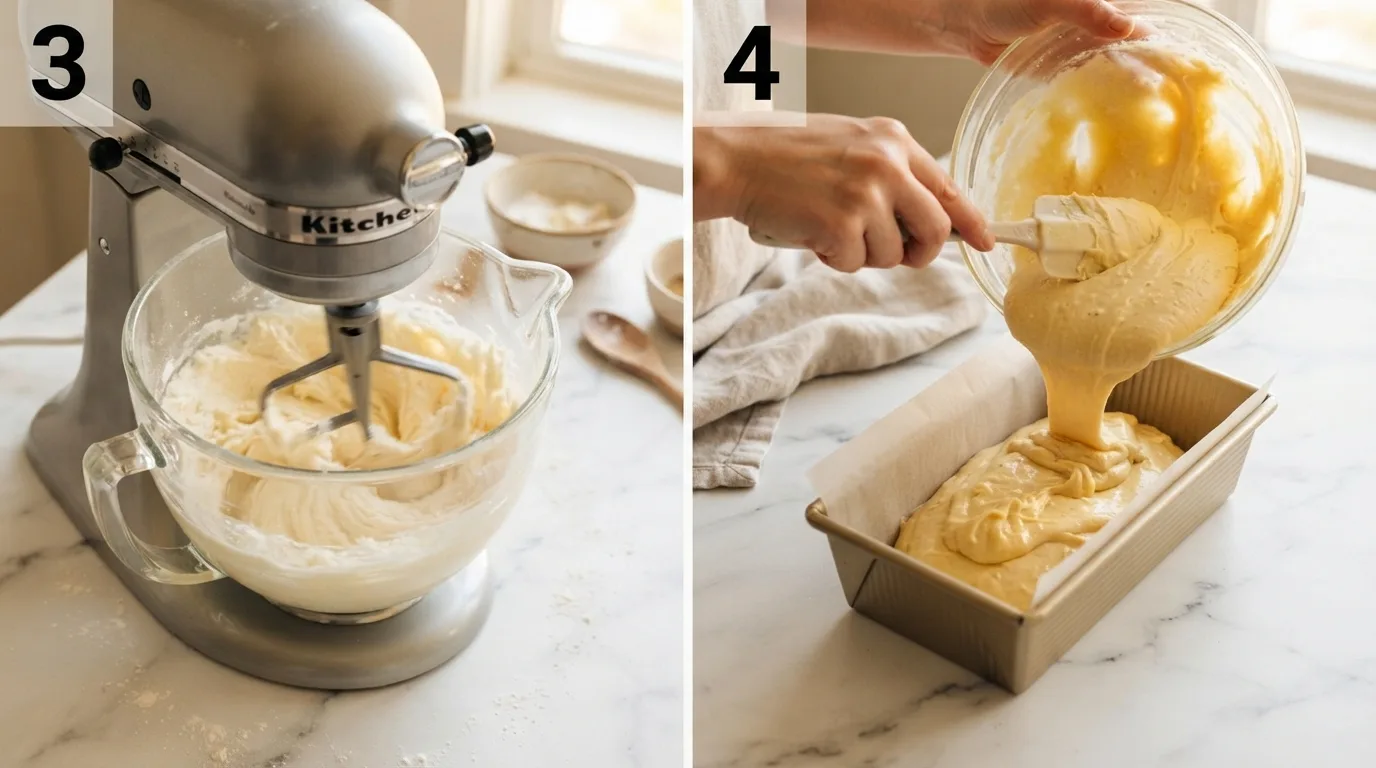
Beat the softened butter and sugar together until pale and fluffy, about 3 minutes. Add the eggs one at a time, beating well after each, then the vanilla. Add the dry ingredients in three additions, alternating with the sour cream and milk, starting and ending with the dry ingredients. Mix just until no streaks of flour remain — overmixing here makes the bread tough instead of tender.
Step 4 — Layer and swirl
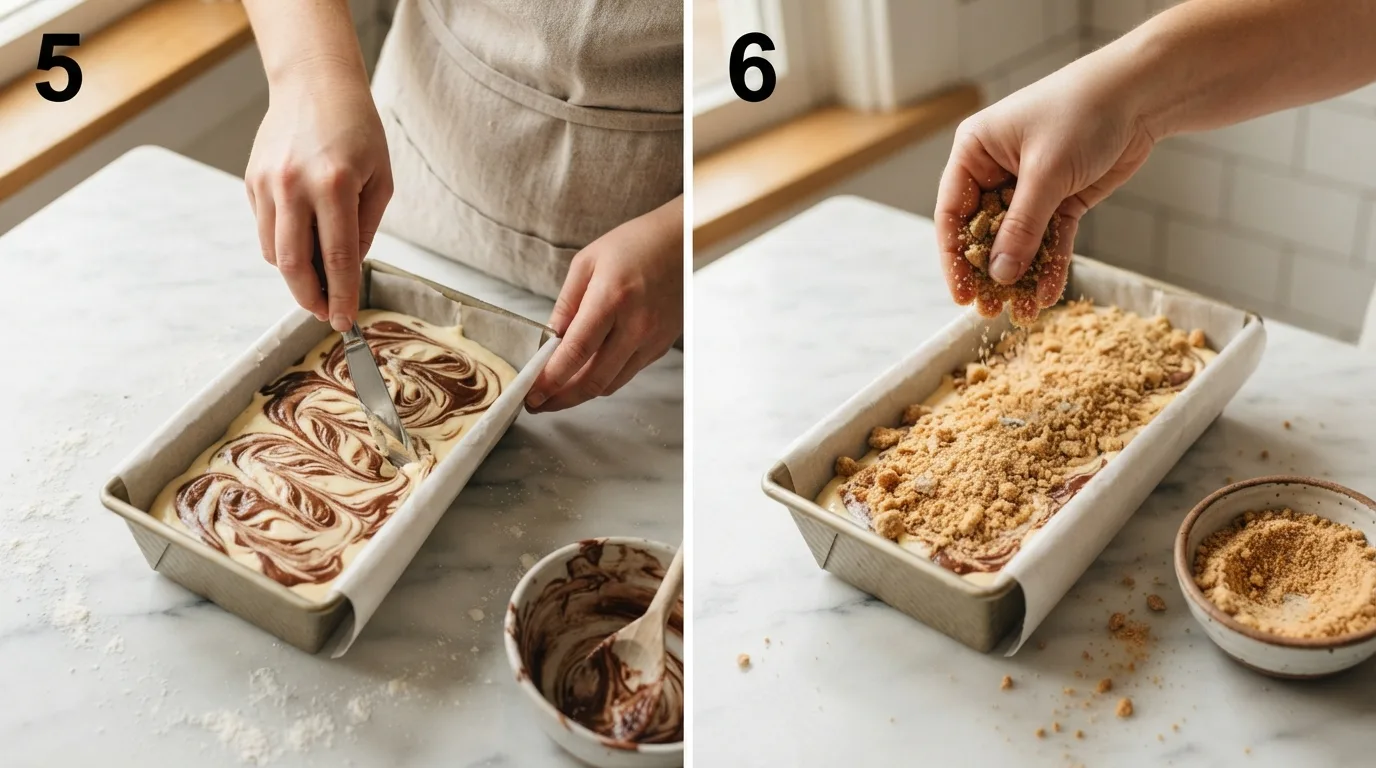
Pour half the bread batter into the prepared loaf pan. Spoon the chilled cheesecake layer evenly over the top, leaving a small border around the edges. Dollop the remaining bread batter over the cheesecake layer. Run a butter knife through both layers in a zigzag or figure-eight motion, 6–8 passes, to create the marbled swirl. Don’t overdo it — too many passes blend the layers into one flat color instead of a visible ribbon.
Step 5 — Add the graham topping and bake
Stir together the graham cracker crumbs, sugar, and melted butter until it looks like wet sand, and sprinkle it evenly over the top of the batter. Bake for 55–65 minutes, until a toothpick inserted into the bread portion (avoiding the cheesecake swirl) comes out clean, and the center of the loaf feels set when you press it gently — it should spring back slowly, not jiggle like liquid.
Step 6 — Cool completely before slicing
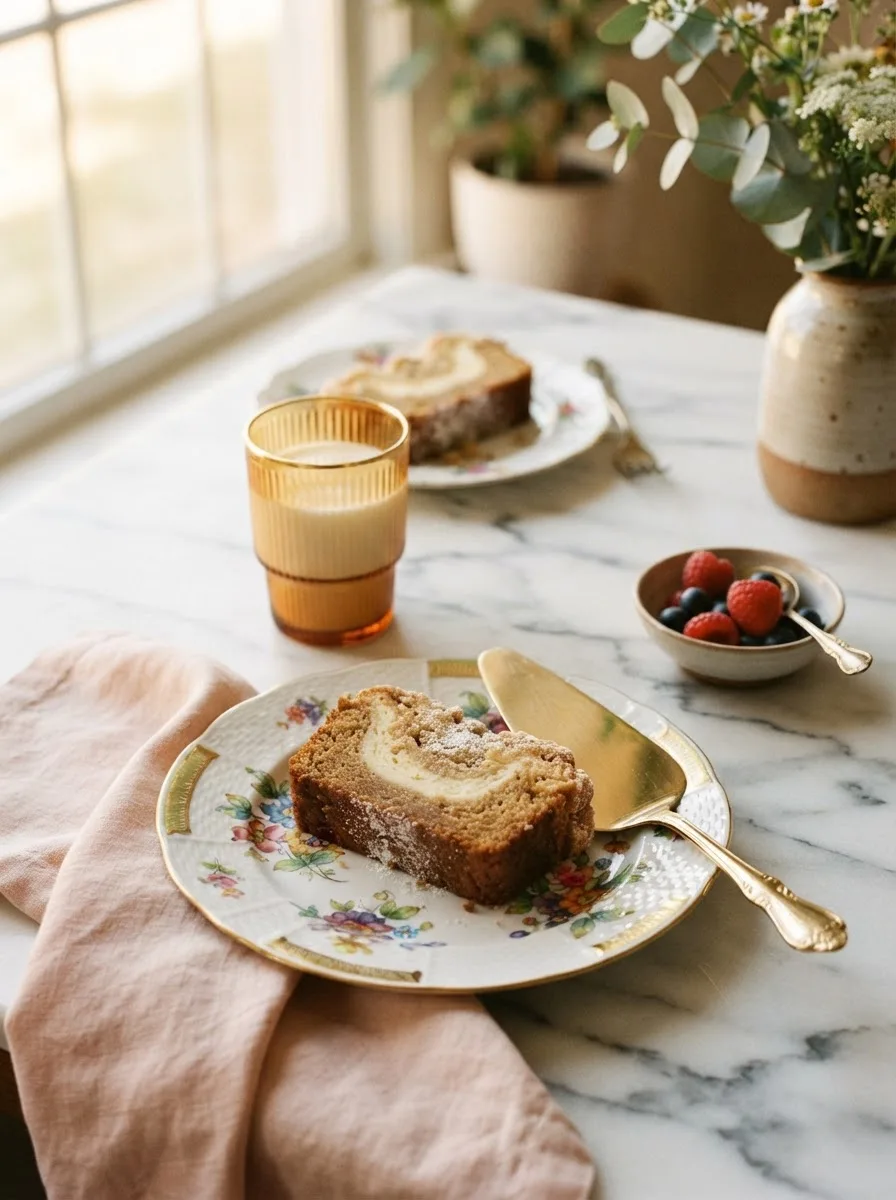
Let the loaf cool in the pan for 20 minutes, then turn it out onto a wire rack and cool completely — at least 2 hours — before slicing. This is the step everyone wants to skip and the one that matters most. The cheesecake layer is still setting as it cools; slice too early and it will look underbaked even when it isn’t.
Pro Tips for Perfect Cheesecake Bread
Tip 1: Chill the cheesecake layer, not the batter. A 10-minute chill firms the cheesecake filling just enough to hold its shape when swirled, without making the batter itself cold and hard to work with.
Tip 2: Use a bench scraper or thin spatula to loosen the loaf, not a knife. A knife along the pan edges tends to drag the graham topping off. A thin metal spatula slides underneath more cleanly.
Tip 3: Weigh your flour if you have a kitchen scale. 220g of flour, scooped-and-leveled by cup measure, can vary by up to 20g depending on how it’s packed. That’s enough to make the difference between a tender crumb and a dense one.
Tip 4: Slice with a warm, dry knife. Run your knife under hot water and dry it between slices. It keeps the cheesecake ribbon from smearing and gives you clean, bakery-style slices.
Variations and Substitutions
Dietary Variations:
- Gluten-free: Swap the all-purpose flour for a 1:1 gluten-free baking blend in both the batter and the cheesecake layer. The crumb will be slightly denser, but the swirl still sets correctly.
- Lower sugar: Reduce the granulated sugar in the batter to ⅔ cup. The cheesecake layer’s sugar shouldn’t be reduced — it needs it to set properly.
Flavor Variations:
- Strawberry cheesecake bread: Fold ¾ cup of diced fresh strawberries into the bread batter before layering, and swap the graham topping for a light dusting of turbinado sugar.
- Lemon cheesecake bread: Add 1 tablespoon of lemon zest to the cheesecake layer for a brighter, tangier version.
Ingredient Substitutions:
- Neufchâtel cheese works as a lower-fat swap for cream cheese, though the layer will be slightly softer.
- Plain Greek yogurt substitutes 1:1 for sour cream with a very slightly tangier result.
This cheesecake bread recipe also freezes well in individual slices, which makes the strawberry variation a good make-ahead option for weekend brunch — similar to how I prep make-ahead components for dolly’s chicken and stuffing casserole the night before a busy dinner.
Troubleshooting
Why did my cheesecake layer sink to the bottom?
This happens when the cheesecake layer is swirled in while still warm and loose, or when the flour was left out of the cheesecake mixture. Chill the layer for 10 minutes before swirling, and don’t skip the tablespoon of flour — it’s what gives the layer enough structure to stay suspended.
My bread is done on the edges but the middle looks wet — what happened?
Most likely the oven temperature ran a little low, or the loaf needed more time than the recipe stated (ovens vary more than people expect). Tent the top loosely with foil if it’s browning too fast, and keep baking in 5-minute increments, checking the bread portion (not the cheesecake swirl) with a toothpick until it comes out clean.
The swirl turned into one flat color instead of a marbled pattern — why?
This means the knife passed through the layers too many times, or the two mixtures were too similar in thickness when swirled. Stick to 6–8 knife passes, and make sure the cheesecake layer has chilled enough to stay distinct from the batter.
Storage and Make-Ahead
Counter: Because of the cream cheese layer, this loaf should not sit at room temperature for more than 2 hours after baking.
Refrigerator: Store tightly wrapped or in an airtight container for up to 5 days. The texture is actually best on day 2, once the cheesecake layer has fully settled.
Freeze: Wrap individual slices tightly in plastic wrap, then foil, and freeze for up to 2 months. Thaw overnight in the fridge.
Reheating: This bread is best served chilled or at cool room temperature, straight from the fridge — no reheating needed. If you’d like it slightly warm, microwave a slice for 10 seconds only.
Make-Ahead: You can make the cheesecake layer up to 2 days ahead and store it covered in the fridge; bring it just barely to room temperature before swirling so it isn’t rock-hard.
Frequently Asked Questions
Q: What exactly is cheesecake bread? A: Cheesecake bread is a sweet quick bread — similar to a pound cake — with an actual cheesecake filling swirled through the center, rather than just cream cheese mixed into the batter.
Q: Can I make this cheesecake bread recipe in a bundt pan instead of a loaf pan? A: Yes, though you’ll need to increase the bake time slightly and watch closely, since a bundt pan has more surface area and can brown faster on the outside before the center sets.
Q: Why is my cheesecake bread gummy in the middle? A: This is almost always underbaking. Because the cheesecake layer needs to reach a set custard texture, this loaf needs a longer bake than a plain quick bread — don’t pull it early just because the top looks golden.
Q: Can I double this recipe for two loaves? A: Yes. Double all ingredients and bake in two separate pans rather than one larger pan, since the swirl and center-setting depend on the standard loaf-pan depth.
Q: Does cheesecake bread need to be refrigerated? A: Yes — because of the cream cheese layer, it should be refrigerated rather than left out at room temperature for extended periods.
Q: Can I skip the graham cracker topping? A: You can, though it’s the detail most testers specifically mentioned. If you skip it, add a light dusting of sugar on top before baking for some surface crunch.
Q: Is this the same as marble cheesecake or is it actually bread? A: It’s genuinely a quick bread — leavened with baking powder and baking soda, not baked in a water bath — with a real cheesecake layer swirled through it, so you get bread texture with cheesecake flavor in the same bite.
More Recipes You’ll Love
- Dolly’s Chicken and Stuffing Casserole — a cozy, make-ahead-friendly weeknight dinner with the same comforting, from-scratch feel.
- Cheesy Ranch Potatoes and Sausage — a one-pan savory dinner for the nights you want minimal cleanup.
- Banana Tempura — if you love a dessert with contrasting textures, this crispy-fried banana treat is the sweet counterpart to this bread.
- Stalekracker Pastalaya Recipe — a hearty, crowd-feeding main that pairs well with a slice of this bread for dessert afterward.
Foolproof Cheesecake Bread
Ingredients
For the Bread Batter:
- 13/4 cup all-purpose flour
- 11/2 tsp baking powder
- 1/4 tsp baking soda
- 1/2 tsp salt
- 1/2 cup unsalted butter, softened
- 3/4 cup granulated sugar
- 2 large eggs, room temperature
- 1 tsp vanilla extract
- 1/2 cup sour cream, room temperature
- 1/4 cup (60ml) whole milk, room temperature
For the Cheesecake Layer:
- 8 oz full-fat cream cheese, softened
- 1/3 cup granulated sugar
- 1 large egg
- 1 tsp vanilla extract
- 1 tbsp all-purpose flour
For the Graham Crumble Topping:
- 1/3 cup graham cracker crumbs
- 2 tbsp granulated sugar
- 2 tbsp unsalted butter, melted
Instructions
- Preheat oven to 350°F (175°C) and grease a 9×5-inch loaf pan.
- Beat the cream cheese and sugar together until smooth, about 2 minutes. Add the egg, vanilla, and flour, and beat just until combined. Chill in the fridge for 10 minutes.
- Whisk together the flour, baking powder, baking soda, and salt in a bowl. Set aside.
- Beat the softened butter and sugar until pale and fluffy, about 3 minutes. Add the eggs one at a time, then the vanilla.
- Add the dry ingredients in three additions, alternating with the sour cream and milk, starting and ending with the dry ingredients. Mix just until combined.
- Pour half the bread batter into the prepared pan. Spoon the chilled cheesecake layer evenly over the top. Dollop the remaining batter over the cheesecake layer.
- Run a butter knife through both layers in a zigzag motion, 6–8 passes, to create a marbled swirl.
- Stir together the graham cracker crumbs, sugar, and melted butter, and sprinkle evenly over the top.
- Bake for 55–65 minutes, until a toothpick inserted into the bread portion comes out clean and the center springs back slowly when pressed.
- Cool in the pan for 20 minutes, then transfer to a wire rack and cool completely, at least 2 hours, before slicing.
Notes
- Bring all refrigerated ingredients to true room temperature before starting — cold ingredients are the most common cause of a streaky, unmarbled swirl.
- The cheesecake layer must chill for 10 minutes before swirling; skipping this causes it to sink to the bottom of the loaf.
- Don't skip the tablespoon of flour in the cheesecake layer — it's what keeps the layer structurally stable during baking.
- Store in the refrigerator, not at room temperature, due to the cream cheese layer.
- The texture improves on day 2, once the cheesecake layer has fully set and chilled.
- Freeze individual slices wrapped tightly in plastic and foil for up to 2 months; thaw overnight in the fridge.
- If the top browns too quickly before the center sets, tent loosely with foil and continue baking in 5-minute increments.
- A warm, dry knife (run under hot water and dried between cuts) gives the cleanest slices without smearing the swirl.