Naomi Watts Pavlova Recipe

The first time I made this Naomi Watts pavlova recipe, the shell cracked into three pieces the second I lifted it off the parchment, and a pool of syrupy liquid had pooled underneath overnight in the fridge. I’d seen the recipe circulating online, credited to the Australian-born actress, and figured a pavlova is a pavlova — how hard could it be? Turns out the answer is: hard enough that I made it four separate times before I understood what was actually going wrong.
The version below is the one that worked on the fourth try, and it’s worked every single time since. It has a shell that shatters like meringue candy on the outside, a soft, marshmallowy center, and none of the weeping or cracking that ruined my first three attempts.
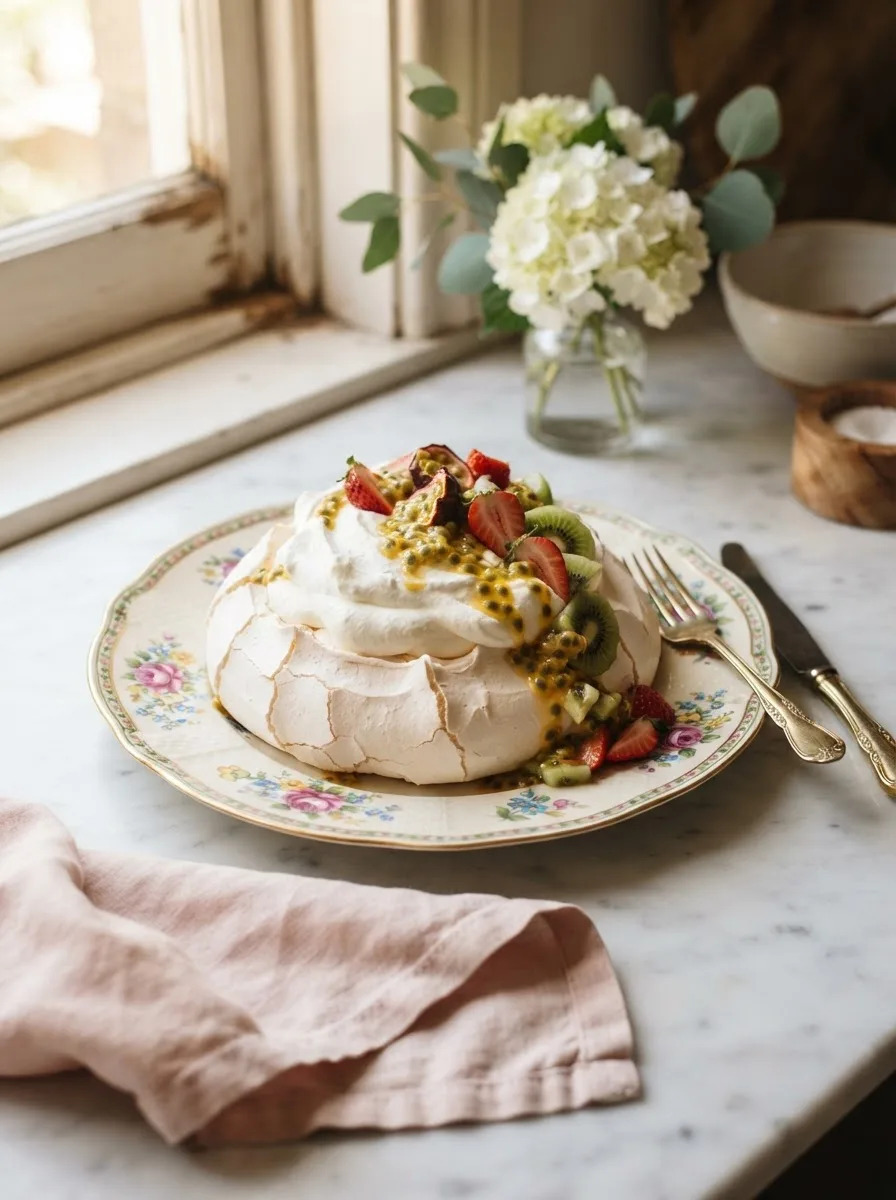
What makes this one different is the sugar. Most pavlova failures come down to undissolved sugar hiding in the meringue — you can’t see it, but you can feel it, and it’s the reason shells crack and weep. I changed exactly one thing between my third and fourth attempt, and that one change is the entire reason this recipe works.
★★★★★ “I’ve avoided making pavlova for years because mine always turned into a sad, cracked puddle. This one held its shape overnight in the fridge and the shell actually shattered when I cut into it. I don’t know what changed but I’m never using another recipe.” — Priya M., recipe tester (pre-launch)
Why You’ll Love This naomi watts pavlova recipe
- No weeping, ever: The shell stays dry and intact for up to two days in the fridge — no syrupy pool forming underneath.
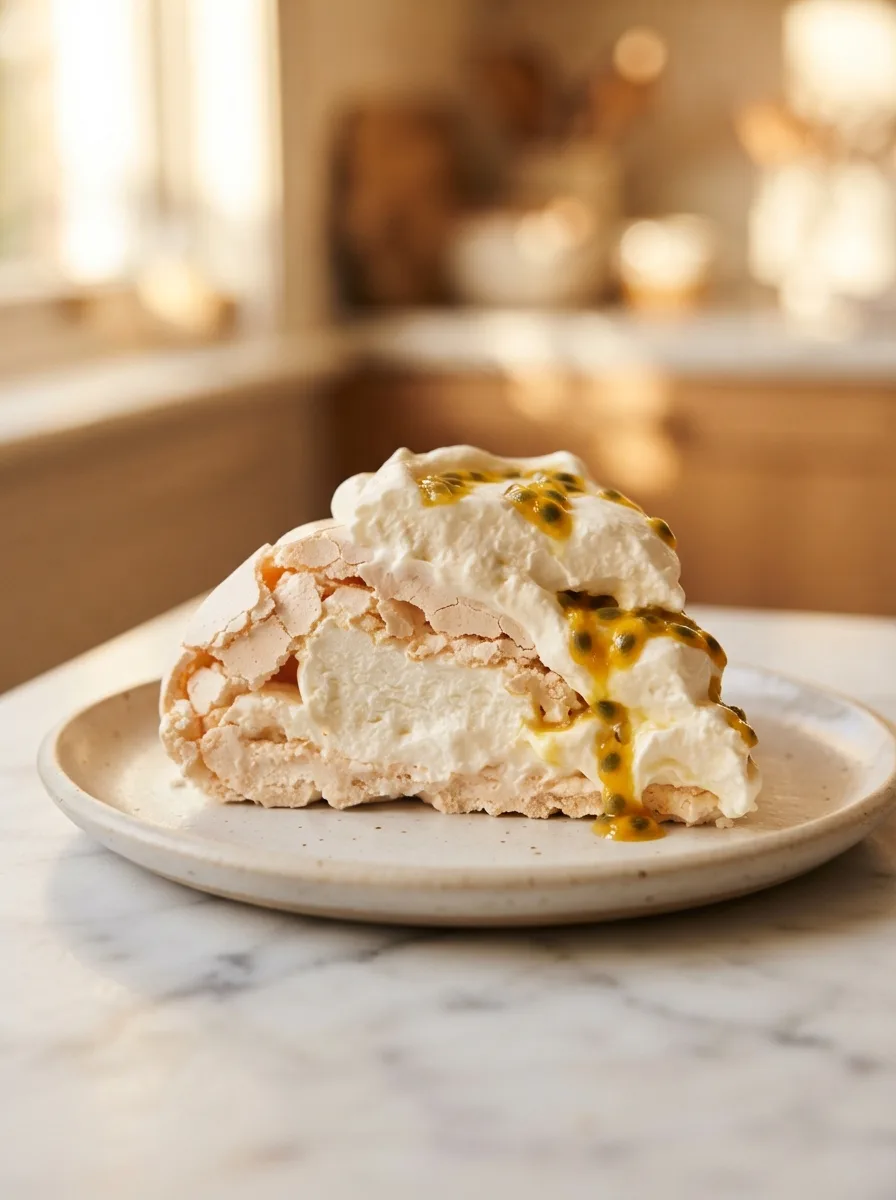
- Shatters, doesn’t crumble: The outside cracks like caramelized sugar candy while the inside stays soft and marshmallowy.
- Make-ahead friendly: The meringue shell can be baked a full day before you plan to serve it.
- No fancy equipment: A hand mixer works just as well as a stand mixer here — you just need patience.
Key Ingredients
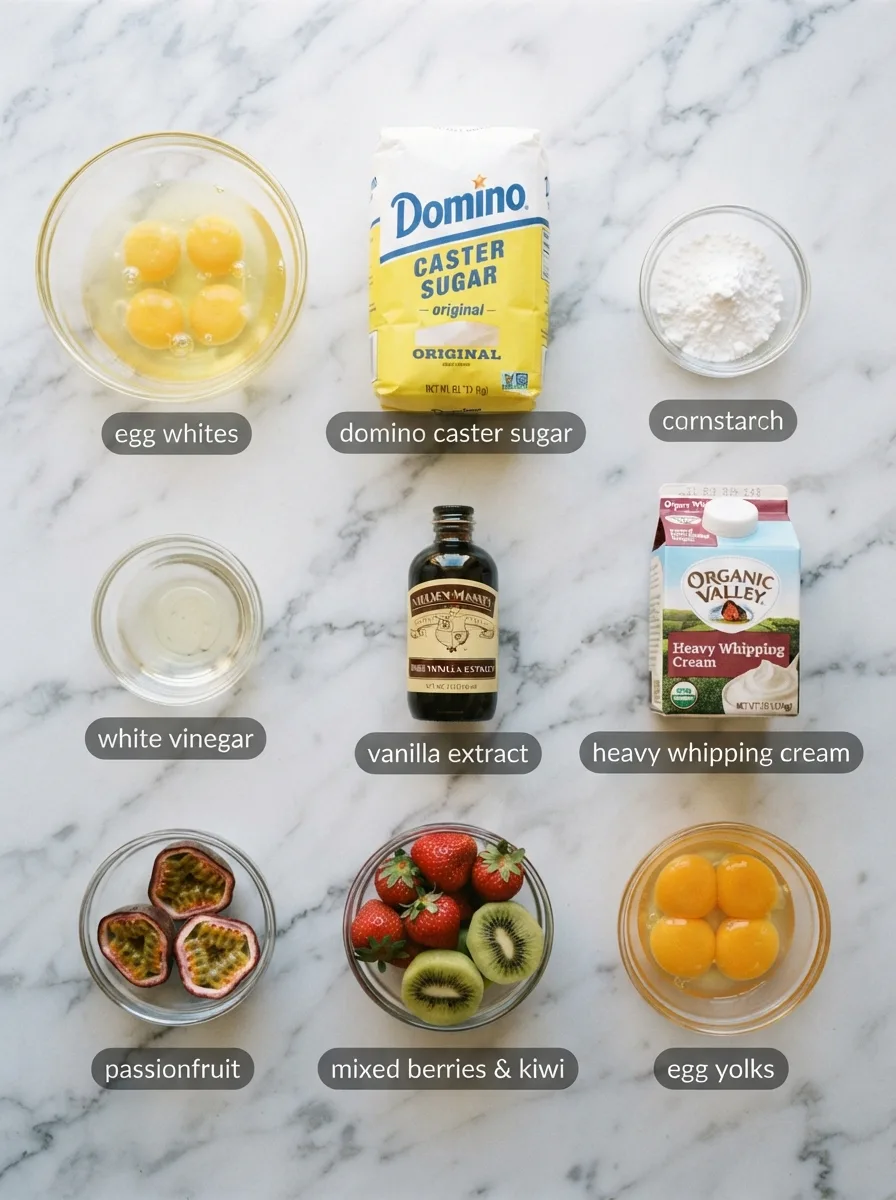
Egg whites (4 large, room temperature). Cold egg whites don’t whip to full volume. Set them out for at least 30 minutes before you start — this alone made a noticeable difference in how high my meringue climbed.
Caster sugar (1 cup / 200g). Caster sugar dissolves faster than regular granulated because the grains are finer. This is the single most important ingredient in the whole recipe — more on that in the controlled test section below.
Cornstarch (2 teaspoons). This is what gives you the soft, marshmallow center instead of a meringue that’s crisp all the way through. Don’t skip it.
White vinegar (1 teaspoon). The acid stabilizes the egg white proteins so the meringue holds its shape in the oven. Lemon juice works as a 1:1 substitute.
Heavy whipping cream (1½ cups). Whip it just until it holds soft peaks — overwhipped cream turns grainy against the smooth meringue.
Fresh passionfruit (4–5, halved). The tang cuts through the sweetness of the meringue and cream. Canned passionfruit pulp works if fresh isn’t available in your area.
Ingredient Note: Weigh your sugar if you have a kitchen scale. Caster sugar measured by volume can pack differently depending on how it settles in the bag, and even a slight shortage changes how well it dissolves into the egg whites.
Equipment You’ll Need
- Stand mixer or hand mixer — you need real speed and stamina to whip egg whites to stiff, glossy peaks; a whisk by hand will take 15+ minutes and rarely gets there
- Rimmed baking sheet — lined with parchment, not a silicone mat, which traps too much moisture underneath
- Offset spatula — for shaping the meringue into a clean disc with a slight well in the center
Controlling Weeping and Cracking (A Controlled Test)
I made this pavlova four times, changing one variable each round: how long I beat the sugar into the egg whites. The first two batches added the sugar in large spoonfuls, about 10 seconds apart. Both weeped overnight and cracked into pieces when I tried to lift them.
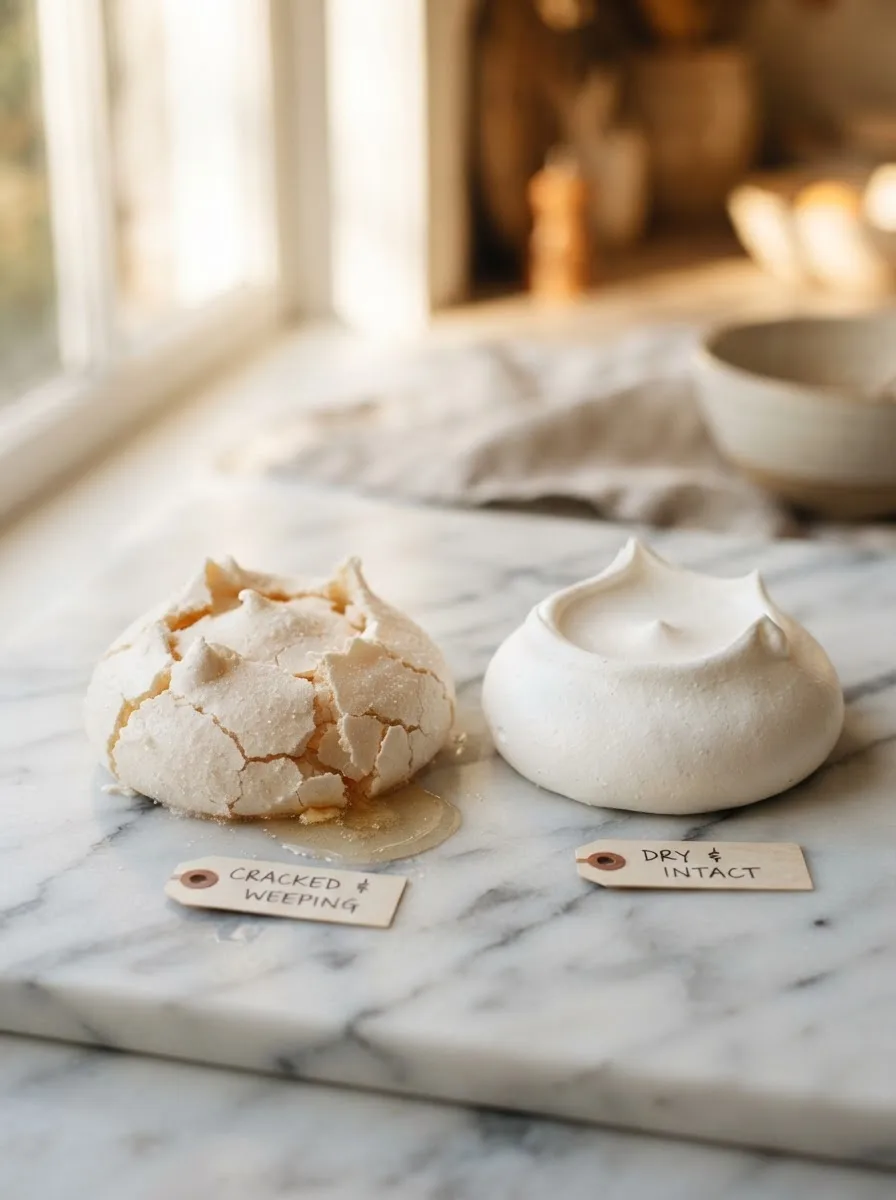
For the third and fourth batches, I added the sugar one tablespoon at a time, beating for a full 20 seconds between each addition — roughly 4 minutes total for the whole cup. Both of those shells came out dry, glossy, and crack-free after baking. The takeaway: rushing the sugar is the single biggest cause of a weeping pavlova. If you can rub a small pinch of the meringue between two fingers and still feel sugar granules, it’s not ready — keep beating.
How to Make naomi watts pavlova recipe
Before you start: Set your egg whites out to reach room temperature, and make sure your mixing bowl is completely free of grease or yolk — even a trace will stop the whites from whipping properly.
Step 1 — Whip the egg whites to soft peaks
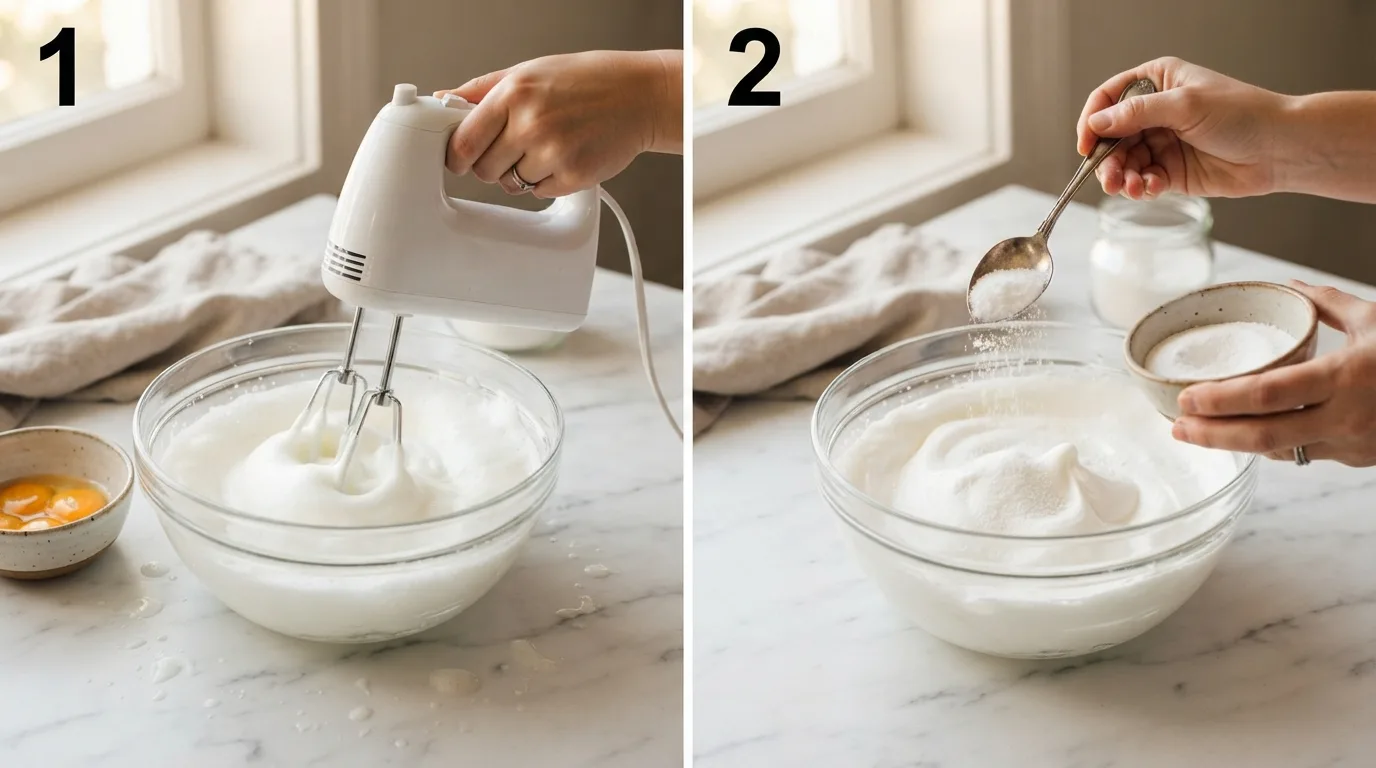
Beat the room-temperature egg whites on medium-high speed until they form soft, foamy peaks that droop slightly when the beater is lifted. This takes about 2–3 minutes. Don’t rush past this stage into adding sugar — the foam needs to be fully established first.
Step 2 — Add the sugar gradually
With the mixer still running, add the caster sugar one tablespoon at a time, beating for a full 20 seconds between each addition. This is the most important step in the entire recipe — see the controlled test above for why.
Step 3 — Beat to stiff, glossy peaks
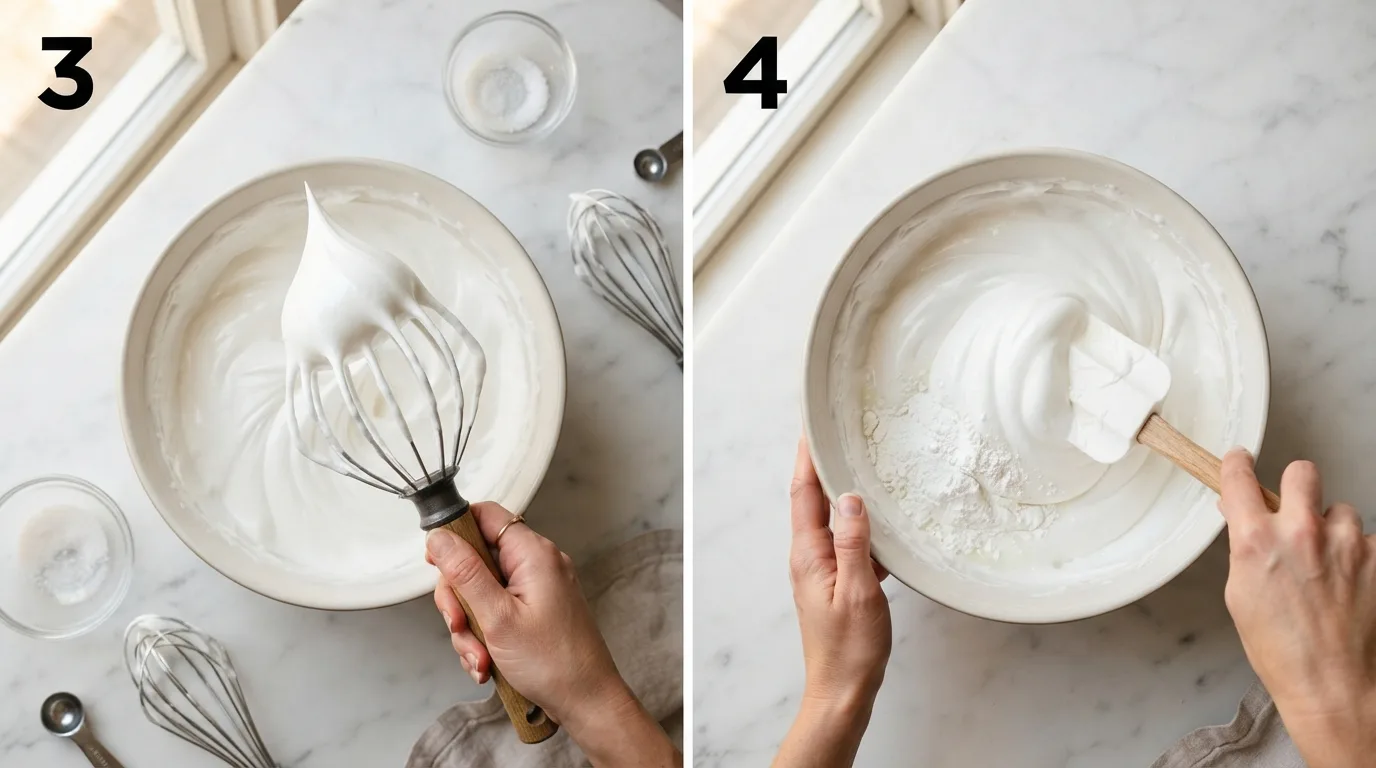
Continue beating until the meringue is thick, glossy, and holds a stiff peak that stands straight up without drooping. Rub a small pinch between your fingers — it should feel completely smooth, with no gritty sugar granules left.
Step 4 — Fold in the cornstarch and vinegar
Sift the cornstarch over the meringue, then add the vinegar and vanilla. Fold gently with a spatula just until combined — overmixing at this stage will deflate the air you just spent 4 minutes building.
Step 5 — Shape and bake
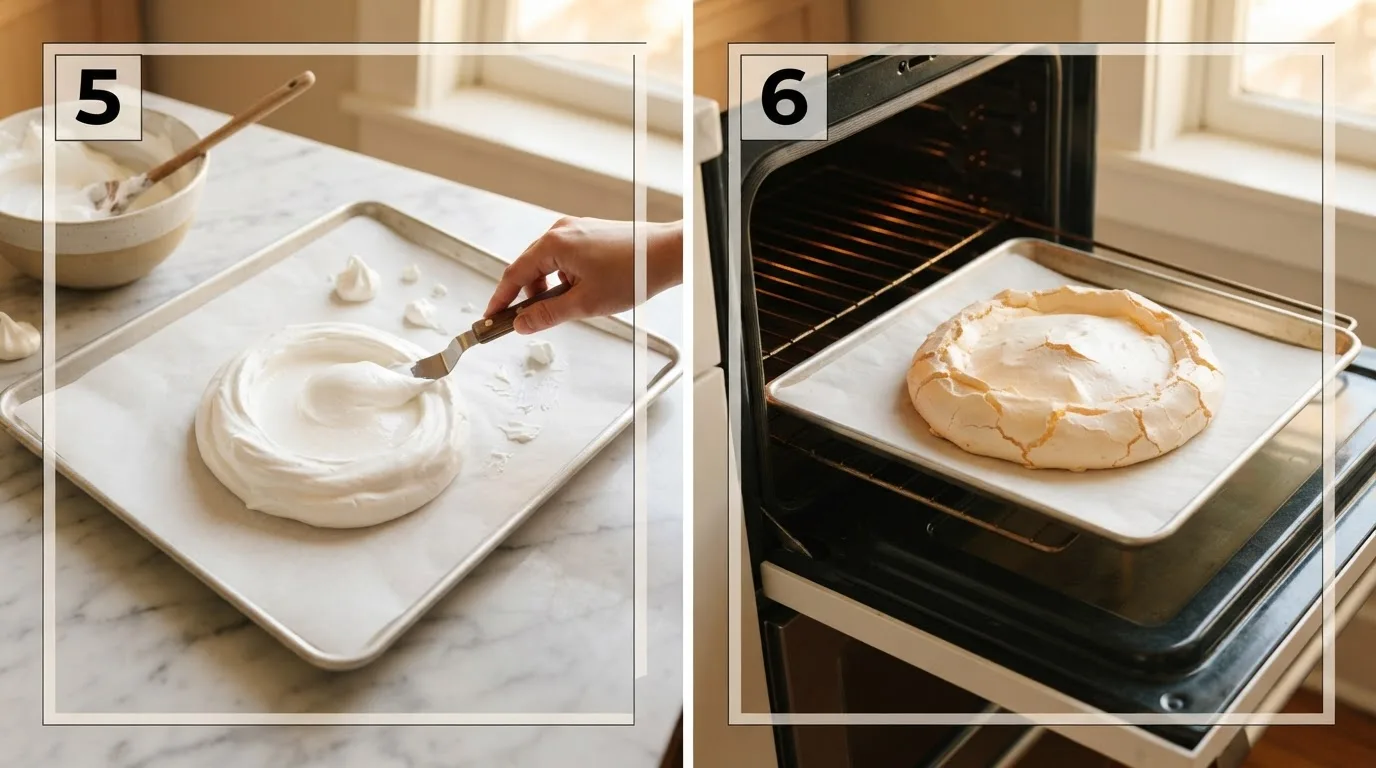
Mound the meringue onto a parchment-lined baking sheet, shaping it into a circle about 8 inches wide with a slight well in the center using the back of a spoon — this is where the cream and fruit will sit later. Bake at 250°F (120°C) for 90 minutes.
Step 6 — Cool completely in the oven
Turn the oven off and leave the pavlova inside with the door closed for at least 1 hour, then crack the door and let it finish cooling to room temperature. This slow cool-down is what prevents the shell from cracking as it contracts.
Step 7 — Top and serve
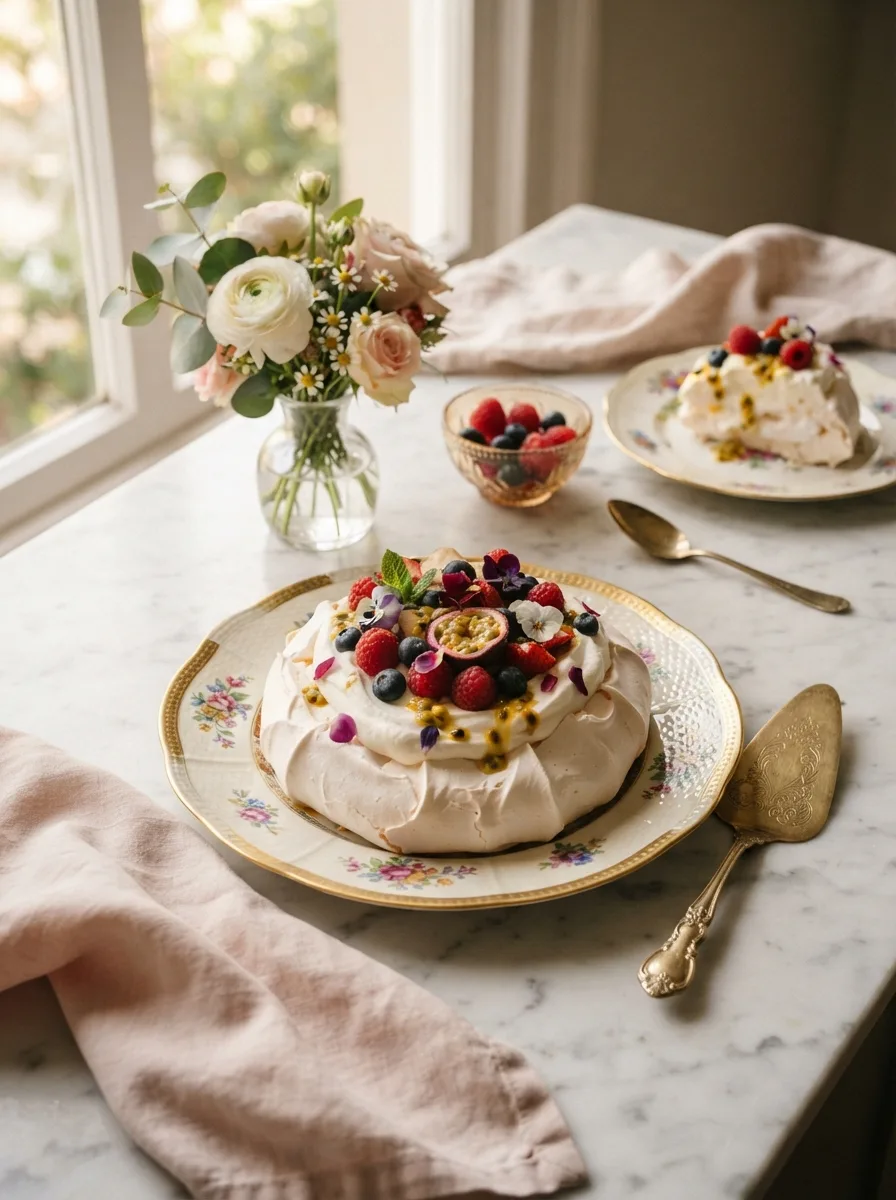
Once fully cooled, spread the whipped cream into the well, then pile on fresh passionfruit pulp, sliced strawberries, and kiwi. Serve within 2 hours of topping — the shell starts to soften once the cream goes on.
Pro Tips for Perfect Naomi Watts Pavlova
Tip 1: Use a glass or metal bowl, never plastic. Plastic bowls hold onto trace grease from previous use even after washing, and any grease at all stops egg whites from whipping to full volume.
Tip 2: Don’t open the oven door during baking. A sudden temperature drop is one of the fastest ways to cause a large crack straight through the center of the shell.
Tip 3: Top it at the last possible moment. The shell is only crisp for about 2 hours once cream touches it — if you’re serving later, keep the shell and toppings separate until just before guests arrive.
Tip 4: Bake on a dry day if you can. Meringue absorbs humidity from the air, which is part of why it can turn tacky or weep in humid climates — if it’s raining, expect a slightly softer shell.
Variations and Substitutions
Dietary Variations:
- Dairy-free: Swap the whipped cream for a coconut cream whipped topping. The texture is slightly less stable, so top the pavlova no more than 1 hour before serving.
- Lower sugar: You can reduce the sugar to ¾ cup, but expect a softer, less stable shell that’s more prone to weeping — this recipe was tested and optimized at the full 1 cup.
Flavor Variations:
- Chocolate swirl: Fold 2 tablespoons of cocoa powder into the meringue just before baking for a marbled shell with a deeper flavor.
Ingredient Substitutions:
- Passionfruit → mango puree, at a similar tang-to-sweetness ratio
- White vinegar → fresh lemon juice, 1:1
If you’re looking for another fruit-forward, tested classic with real personality behind it, my fritar tomate is worth a look — same testing rigor, completely different flavor direction.
Troubleshooting
Why is there liquid pooling under my pavlova?
This is weeping, and it almost always means the sugar wasn’t fully dissolved before baking. Next time, slow down the sugar addition to a full 20 seconds per tablespoon, and rub a pinch of meringue between your fingers before moving on — it should feel completely smooth.
Why did my pavlova crack all the way through?
A large center crack usually means the oven temperature dropped suddenly, either from opening the door or an oven that runs hot and cycles unevenly. Keep the door shut for the full 90 minutes, and let it cool inside the turned-off oven afterward.
Why is my meringue not holding stiff peaks?
Check for grease in your bowl or any trace of egg yolk in the whites — both will prevent the proteins from whipping properly. Start over with a completely clean glass bowl if this happens.
Storage and Make-Ahead
Counter: The unbaked meringue shell will start to soften within a few hours at room temperature once humid air reaches it — bake the same day you plan to serve, or store as below.
Refrigerator: Once topped with cream and fruit, the pavlova is best eaten within 2 hours. The bare, untopped shell can sit in the fridge in an airtight container for up to 2 days.
Freeze: The bare shell freezes well for up to 1 month. Wrap it loosely in plastic once fully cooled, then thaw at room temperature for 2 hours before topping.
Reheating: Pavlova isn’t reheated — if the shell has gone slightly soft from humidity, a very low oven (200°F) for 10 minutes can crisp the outside back up before topping.
Make-Ahead: Bake the shell up to 2 days in advance and store bare in an airtight container. Whip the cream and cut the fruit no more than a few hours before serving, then assemble right before guests arrive.
Frequently Asked Questions
Q: Is this really Naomi Watts’ actual pavlova recipe? A: This recipe is based on the version of a Naomi Watts pavlova that’s circulated online and is associated with the Australian-born actress. I tested and adjusted it in my own kitchen until it stopped weeping and cracking — the method below is my tested version.
Q: Why is pavlova associated with Australia? A: Pavlova is considered a national dessert in both Australia and New Zealand, named after the Russian ballerina Anna Pavlova. Naomi Watts, who was born in England and raised partly in Australia, has spoken about pavlova as a dish tied to her Australian upbringing.
Q: Can I make pavlova a day ahead of my event? A: Yes — bake the bare shell up to 2 days ahead and store it in an airtight container at room temperature. Add the cream and fruit no more than 2 hours before serving.
Q: Why did my pavlova shrink after baking? A: A small amount of shrinkage is normal as the meringue cools and the air inside contracts. Cooling it slowly in the turned-off oven, rather than pulling it out immediately, minimizes this.
Q: Can I use granulated sugar instead of caster sugar? A: You can, but it takes longer to dissolve fully because the granules are larger. If using granulated, add it even more slowly — closer to 30 seconds between tablespoons — and check for grittiness before moving on.
Q: How do I know my meringue is ready to bake? A: It should hold a stiff, glossy peak that stands straight up without drooping, and feel completely smooth (not gritty) when rubbed between two fingers.
Q: Can I make individual mini pavlovas instead of one large one? A: Yes — divide the meringue into 6–8 smaller mounds and reduce the bake time to about 60 minutes, checking that the outside is dry and firm before turning off the oven.
More Recipes You’ll Love
- Smithfield’s Brunswick Stew Recipe — a slow-simmered, tested Southern classic if you’re after something savory next
- Big Hunk Copycat Recipe — another candy-style project with the same attention to sugar-stage testing
- Zehnder’s Buttered Noodles Recipe — a simple, comforting side that pairs well with a dinner party menu
- Fritar Tomate — a bright, fruit-forward recipe with the same testing rigor applied to a totally different flavor direction
Naomi Watts Pavlova Recipe
Ingredients
For the meringue shell:
- 4 large egg whites, room temperature
- 1 cup caster sugar
- 2 teaspoon cornstarch
- 1 teaspoon white vinegar
- 1/2 teaspoon vanilla extract
For the topping:
- 11/2 cup heavy whipping cream
- 4 –5 fresh passionfruit, halved
- 1 cup sliced strawberries
- 1 kiwi, sliced
Instructions
- Preheat the oven to 250°F (120°C) and line a baking sheet with parchment paper.
- Beat the room-temperature egg whites on medium-high speed until soft, foamy peaks form, about 2–3 minutes.
- With the mixer running, add the caster sugar one tablespoon at a time, beating a full 20 seconds between each addition, about 4 minutes total.
- Continue beating until the meringue is thick, glossy, and holds a stiff peak. Rub a pinch between your fingers to confirm it’s smooth, not gritty.
- Sift the cornstarch over the meringue and add the vinegar and vanilla. Fold gently until just combined.
- Mound the meringue onto the parchment-lined sheet into an 8-inch circle, creating a shallow well in the center with the back of a spoon.
- Bake for 90 minutes without opening the oven door.
- Turn off the oven and leave the pavlova inside with the door closed for 1 hour, then crack the door and let it cool fully to room temperature.
- Whip the cream to soft peaks and spread it into the well of the cooled shell.
- Top with passionfruit pulp, strawberries, and kiwi. Serve within 2 hours of topping.
Notes
- Store the bare, untopped shell in an airtight container at room temperature for up to 2 days, or freeze for up to 1 month.
- Once topped with cream and fruit, the pavlova is best eaten within 2 hours before the shell begins to soften.
- For a dairy-free version, substitute the whipped cream with a whipped coconut cream topping and serve within 1 hour of assembling.
- If using granulated sugar instead of caster, slow the addition to about 30 seconds per tablespoon to ensure it fully dissolves.