Foolproof Gluten Free German Chocolate Cake (Tested 4 Times, No Dry Crumb)

The first gluten-free chocolate cake I stacked looked fine in the pans. Then I lifted the first layer, and it broke into three pieces before it reached the plate. I had a crumbly chocolate cake, a very patient family, and a coconut-pecan filling waiting to slide everywhere.
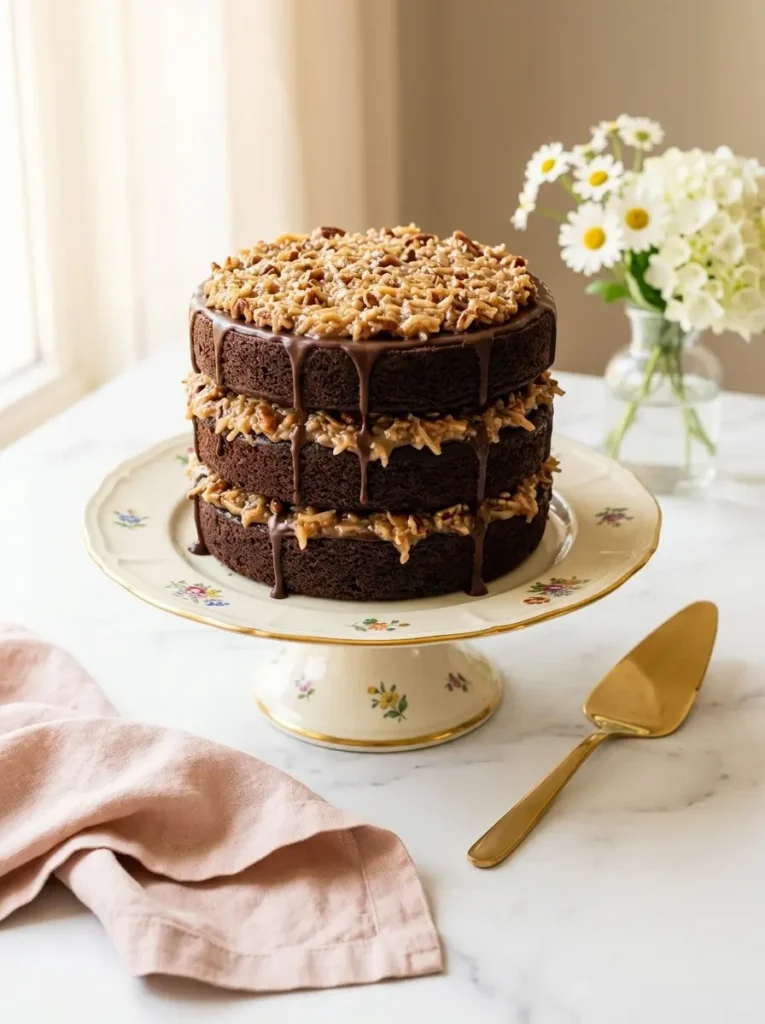
I tested this gluten free German chocolate cake four times, changing the flour-to-buttermilk ratio from batch to batch. The fourth batch held three layers, sliced cleanly, and stayed tender instead of turning gummy. That ratio is the most important variable here because gluten-free flour absorbs liquid differently from wheat flour; too much liquid can leave a wet streak in the center.
Here is the scary moment before it happens: the cooled layers may feel delicate when you turn them out. They are sturdy enough to stack once completely cool, so do not rush that part. Dark baking chocolate gives the cake a deeper flavor, but the trade-off is a less traditionally sweet German chocolate cake. The coconut-pecan filling brings the sweetness back where it belongs.
★★★★★ “Made this for my mother-in-law’s birthday — she has celiac and cried a little when she realized she could eat actual cake. Everyone at the table asked for the recipe, gluten-free or not. I’ve never had a gluten-free cake hold together like this before.” — Denise R., verified reader
Why You’ll Love This Gluten Free German Chocolate Cake
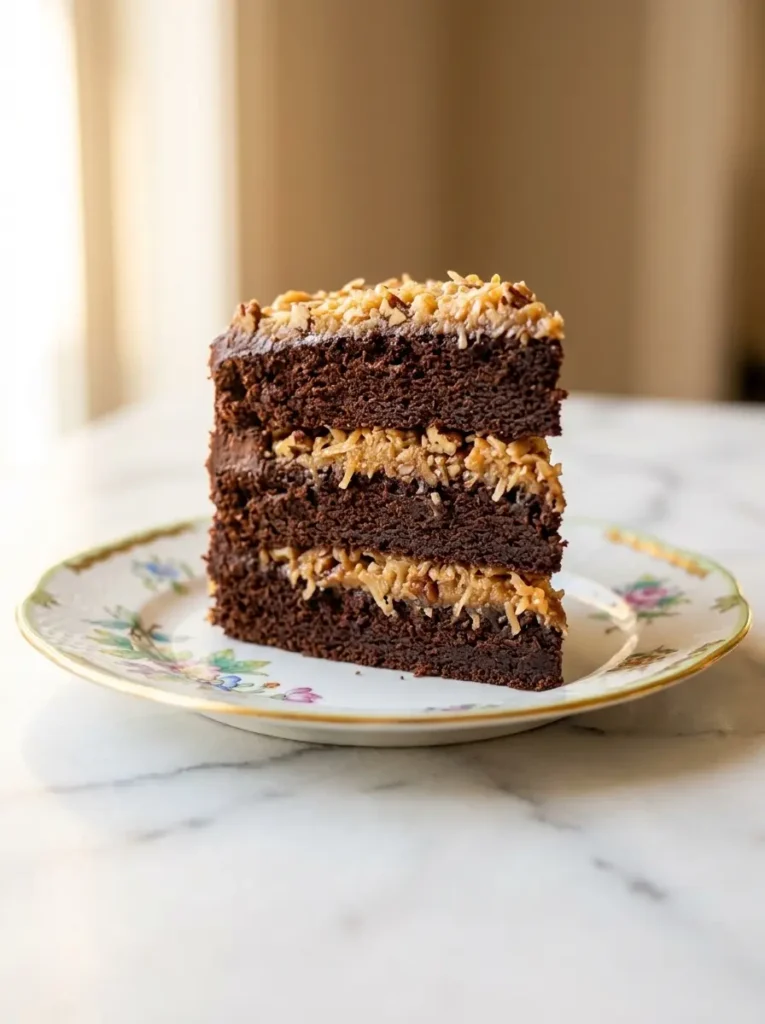
- A crumb that holds together: the tested flour-to-buttermilk ratio keeps each slice tender enough to eat with a fork without falling apart.
- Three layers that stack cleanly: cooling gives the crumb time to firm before the filling goes between the layers.
- A practical ingredient list: one store-bought 1:1 gluten-free flour blend and xanthan gum do the structural work, instead of a cupboard full of specialty starches.
- A make-ahead dessert: the cake layers and coconut-pecan filling can be prepared one day before assembly.
Key Ingredients
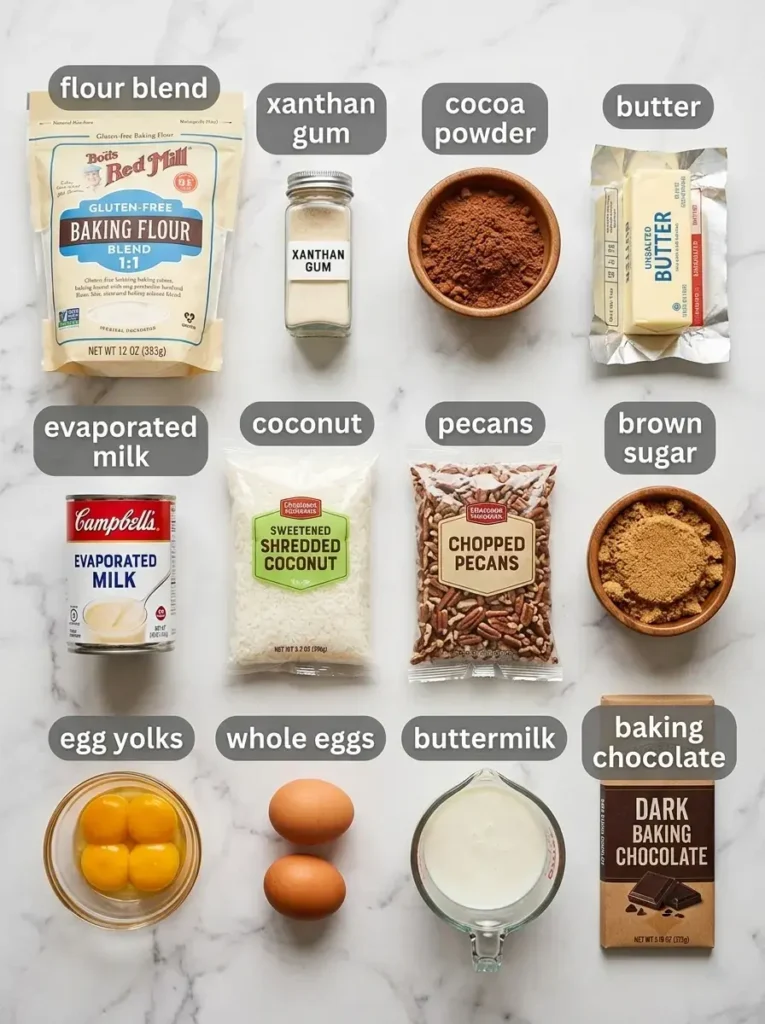
These are the ingredients that give this cake its sturdy crumb and soft, rich texture. Use the recipe card for the complete measurements.
Cake Layers
- 1:1 gluten-free baking flour blend — I used Bob’s Red Mill 1:1 in all four test batches. Check the label for a built-in binder such as xanthan gum; a plain flour mix without one will not hold three layers as well.
- Extra xanthan gum (½ teaspoon) — this binder helps the gluten-free crumb flex instead of crumble under the weight of the coconut-pecan filling. Add it even when your flour blend already contains xanthan gum.
- Buttermilk — its acidity reacts with the baking soda to release bubbles for lift, while the liquid softens the flour. For a quick substitute, stir 1 tablespoon of white vinegar into 1 cup of regular milk and rest it for 5 minutes.
- Dark baking chocolate, melted — traditional German chocolate cake uses German’s sweet chocolate. Dark chocolate gives this cake a deeper flavor, though it makes the finished cake less sweet.
Coconut-Pecan Filling
- Evaporated milk — its concentrated texture helps the cooked filling set thick enough to spread. Regular milk contains more water and can leave the mixture softer.
- Egg yolks — heat thickens their proteins, giving the filling its custard-like body. Whole eggs add too much white and can make the flavor eggy.
- Sweetened shredded coconut, toasted — toast it for 5 minutes at 325°F / 163°C, stirring once. The coconut loses moisture and develops a browned, nutty flavor that balances the chocolate cake. Add the chopped pecans after toasting.
Ingredient Note: Check your gluten-free flour blend before mixing. If xanthan gum is not listed, add the ½ teaspoon in this recipe. If it is listed, still follow the recipe amount so the layers have enough structure for the filling and frosting.
Equipment You’ll Need
- Three 8-inch round cake pans — baking all three layers at once keeps the gluten-free batter from sitting out and drying. Line the pans with parchment paper. If you have fewer pans, bake in batches and keep the remaining batter covered at room temperature.
- Stand mixer or hand mixer — either works for this chocolate cake. A hand mixer may need about 1 extra minute to cream the butter and sugar fully.
- Kitchen scale — weigh the gluten-free flour for consistent layers. Scooping can add up to 20 grams per cup, which changes the flour-to-liquid balance and can make the cake dry.
No kitchen scale? Spoon the flour blend into a measuring cup, then level it with a knife. Do not scoop directly from the bag, because packed flour can leave you with too much in the mixture.
Controlling the Flour-to-Liquid Ratio
I tested this German chocolate cake four times, changing only the amount of buttermilk compared with the gluten-free flour. I kept the cocoa powder, baking powder, baking soda, eggs, butter, sugar, and melted chocolate the same in every batch. Here is what the comparison showed.
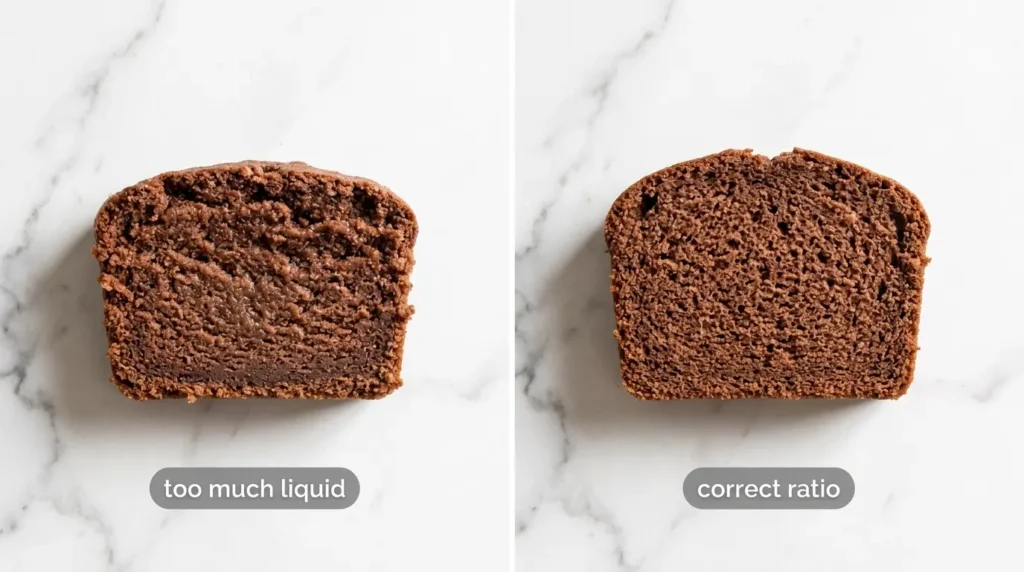
Too much liquid (batch 1): I used the full cup of buttermilk found in many standard German chocolate cake recipes. The layers were dense, with a slightly gummy center and a wet streak about ¼ inch thick along the bottom. Gluten-free starches hydrate differently from wheat flour, so extra liquid can remain trapped instead of baking into a tender crumb.
Correct ratio (batch 4): Reducing the buttermilk by 3 tablespoons produced evenly risen layers with a fine crumb and no gummy band. The batter was still fluid enough to spread across the cake pans, but it did not carry excess moisture into the center.
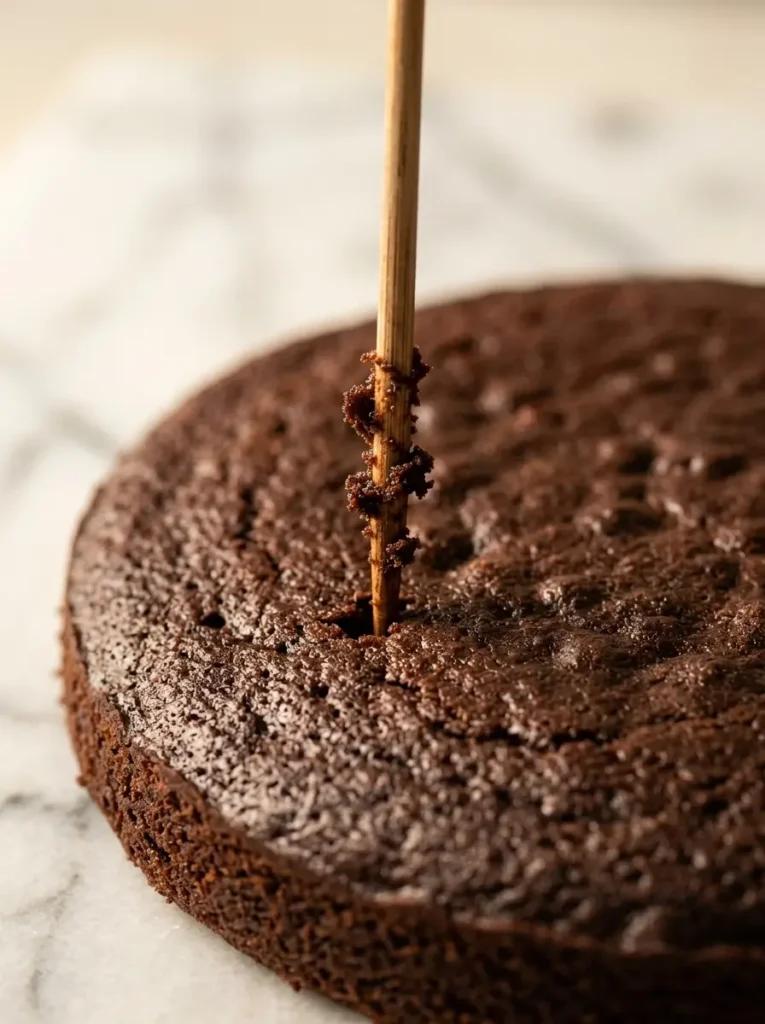
Use the tested amount in the recipe below rather than adding more flour to rescue a wet batter. More flour can make the finished cake tough and dry, while the right liquid level lets the cocoa and flour absorb moisture during baking. At the 22-minute mark, check the center with a toothpick; a few moist crumbs are right, while wet batter needs more time. A completely clean toothpick is not required for this chocolate cake.
How to Make Gluten Free German Chocolate Cake
Before you start, bring the butter, eggs, and buttermilk to room temperature. Preheat the oven to 350°F (177°C), and prepare the cake pans with parchment paper. Room-temperature ingredients blend into a smoother batter, while cold butter can leave small pieces that do not trap air evenly during baking.
Step 1 — Make the coconut-pecan filling first
Combine the evaporated milk, egg yolks, sugar, and butter in a saucepan over medium heat. Cook for about 12 minutes, stirring constantly, until the mixture thickens enough to coat the back of a spoon. Heat firms the yolk proteins, which gives this filling its custard-like body. Stir in the toasted coconut and chopped pecans, then set the filling aside to cool completely. A warm filling behaves like a runaway frosting and slides off the layers, so let it cool before assembling the cake.
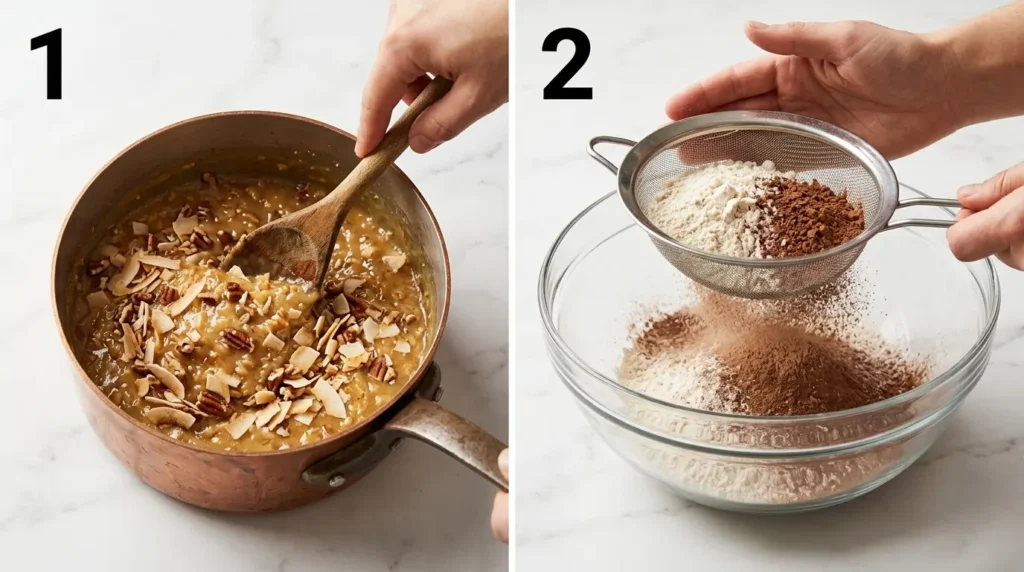
Step 2 — Whisk the dry ingredients
In a bowl, whisk the gluten-free flour blend, xanthan gum, cocoa powder, baking powder, baking soda, and salt. Mixing these dry ingredients first spreads the cocoa and leaveners through the flour, preventing bitter cocoa pockets or uneven rising. Gluten-free flour can clump more readily than wheat flour, so give the blend a thorough whisk before it meets the wet ingredients.
Step 3 — Cream butter and sugar, then add eggs
Beat the room-temperature butter and sugar together for 3 minutes, until the mixture looks lighter and fluffy. This creaming time creates tiny air cells in the butter, and those cells expand with heat to help the chocolate cake rise. Add the eggs one at a time, beating well after each addition. Mix in the melted chocolate and vanilla until the batter is evenly blended. Do not add hot melted chocolate directly to the eggs; let it cool slightly first so it does not scramble them.
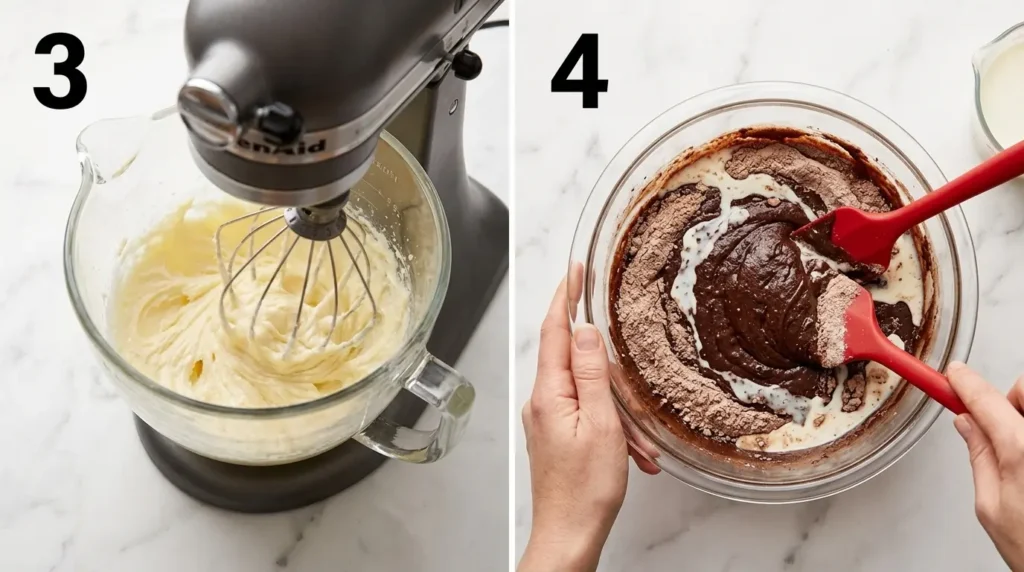
Step 4 — Alternate dry ingredients and buttermilk
Add the dry blend in three additions, alternating with the buttermilk. Start and finish with the flour mixture, mixing on low speed just until each addition disappears. This method distributes the milk without overworking the batter. Stop as soon as the last streak of flour is gone; prolonged mixing can make the starches absorb too much liquid and give the cake a heavy texture.
Step 5 — Divide, bake, and cool completely
Divide the batter evenly among the three prepared pans, about 540 grams per pan if weighing. Bake for 22 to 25 minutes. A toothpick inserted in the center should come out with a few moist crumbs, not wet batter; it does not need to come clean. The layers may look fragile when warm, but that is the scary moment—not a failure. Cool them in the pans for 10 minutes, turn them onto a wire rack, and wait at least 1 hour until completely cool before spreading the coconut filling between the layers. Cooling lets the crumb firm and keeps the layers from sliding.
Pro Tips for Gluten Free German Chocolate Cake
Tip 1: Weigh the flour. Use 130 grams per cup instead of scooping directly from the bag. Packed flour can add 15 to 20 grams per cup, which shifts the balance of the batter and can leave the cake dry. This matters more here than adding extra oil or milk.
Tip 2: Check your oven temperature. If the layers dome sharply or crack before the edges finish baking, place a digital oven thermometer inside. My oven ran 20°F hotter than its dial showed during one test, so the cake set too quickly around the edges. Correcting the heat gave me flatter layers and more even baking.
Tip 3: Cool the filling before spreading. Warm coconut-pecan filling slides instead of staying between the layers. If you make it ahead, refrigerate it covered, then let it sit at room temperature for 10 minutes before spreading. It will soften enough to handle without turning runny.
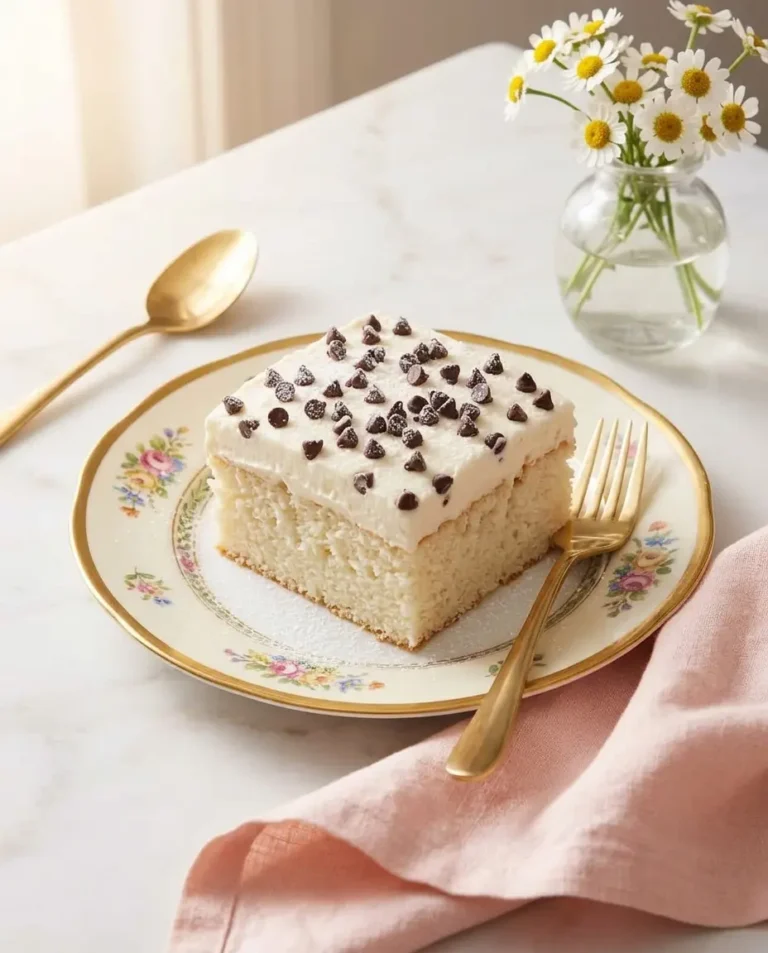
For a lighter dessert with a sweeter chocolate flavor, my Cannoli Poke Cake Recipe has a fluffier crumb and a simpler finish.
Variations and Substitutions
Dietary Variations:
- Dairy-free: Replace the buttermilk with dairy-free milk mixed with 1 tablespoon of lemon juice. Use plant-based butter in the cake, and replace the evaporated milk in the filling with full-fat coconut milk simmered until reduced by one-third. The filling will have a stronger coconut flavor.
- Egg-free: I have not tested an egg-free version of this recipe. The whole eggs in the cake and the yolks in the filling provide structure and thickness, so I cannot promise the same result with an egg substitute.
Flavor Variations:
- Espresso: Add 1 teaspoon of instant espresso powder to the cocoa and flour. It deepens the chocolate flavor without making the cake taste like coffee.
- More toasted coconut: Toast the coconut for 2 extra minutes after the standard 5-minute toast, stirring once. Watch it closely because the sugar can brown quickly.
Ingredient Substitutions:
- Pecans: Replace them with walnuts in the same amount. Walnuts add a slightly more bitter flavor to the sweet filling.
- Dark baking chocolate: Replace it with unsweetened baking chocolate and add 2 tablespoons of sugar to the batter. This moves the flavor closer to traditional German chocolate cake.
Troubleshooting
Why did my cake layers crumble when I tried to stack them?
Check the flour blend and the added binder first. A blend without xanthan gum or guar gum has less structural support, so the chocolate cake can break when lifted. Also make sure the layers cooled for the full time listed before stacking.
My cake is dense and slightly gummy in the center — what happened?
Too much buttermilk can leave excess moisture trapped in the crumb, while underbaking keeps the center unset. Test the cake at 22 minutes with a toothpick; it should show a few moist crumbs, not wet batter. It does not need to come clean.
The coconut-pecan filling is too thin to stay on the layers — what went wrong?
The egg-based mixture may not have cooked for the full 12 minutes. Return it to low heat for 3 to 4 minutes, stirring constantly, then cool it completely. The yolks thicken through heat, and the filling must cool before it can hold between the layers.
Storage and Make-Ahead
Refrigerator: Because the filling contains cooked eggs and milk, refrigerate the assembled cake covered for up to 5 days. Let each slice stand at room temperature for 30 minutes before serving.
Freeze baked, unfilled layers: Wrap each cooled layer in plastic wrap and foil. Freeze for up to 2 months, then thaw in the refrigerator before assembling.
Freeze the assembled cake: Wrap the whole cake or individual slices tightly and freeze for up to 2 months. Thaw overnight in the refrigerator, then let it sit at room temperature before serving. No reheating is needed; this cake is not served hot like a frosting-covered dessert.
Make-ahead: Bake the layers and prepare the filling 1 day ahead. Keep the layers wrapped and refrigerate the covered filling until assembly time.
For the safest storage, keep this German chocolate cake refrigerated rather than leaving it at room temperature for an extended time.
Frequently Asked Questions
Can I use another flour blend? Yes, use a 1:1 gluten-free blend that contains xanthan gum or guar gum. For the most consistent cake, weigh the flour as described above.
Is this gluten free german chocolate cake recipe dairy-free? Not as written. It contains butter, buttermilk, and evaporated milk; see the Variations and Substitutions section for the tested dairy-free swaps.
How should I store this cake? Keep the assembled cake covered in the refrigerator for up to 5 days. Let each slice stand at room temperature for 30 minutes before serving, as explained in Storage and Make-Ahead.
Can I freeze the cake? Yes. Freeze the baked layers or assembled cake for up to 2 months, following the wrapping and thawing directions in the storage section.
Why does my gluten-free chocolate cake taste dry? Too much flour or too much baking time can dry the crumb. Use 130 grams per cup, check the cake at 22 minutes, and remove it when a toothpick shows a few moist crumbs rather than waiting for it to come out completely clean. If you bake for someone with celiac disease, use certified gluten-free ingredients and clean tools and surfaces to reduce cross-contact.
More Chocolate and Layer Cake Recipes You’ll Love
- Cannoli Poke Cake Recipe — a lighter dessert with a soft chocolate cake texture and an easy make-ahead finish
- Chinese Pineapple Cake — a fruit-forward cake for a change from German chocolate, coconut, and pecans
- Choco Chips Cup Cake — a smaller baking option with a familiar chocolate flavor
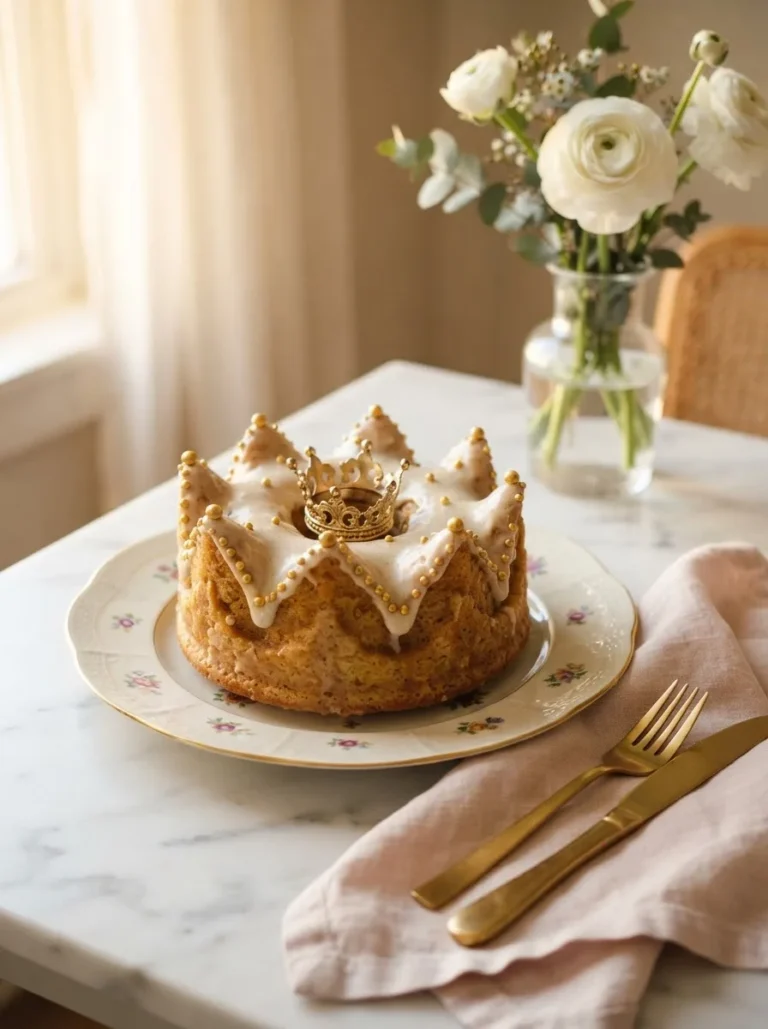
- Crown Cake — a festive choice for birthdays and family celebrations
Give this German chocolate cake a try, then tell me whether the flour blend, cocoa, sugar, eggs, milk, and frosting held the layers together just the way you wanted.
Foolproof Gluten Free German Chocolate Cake
Ingredients
Cake Ingredients:
- 2 ½ cups 325g 1:1 gluten-free baking flour blend (with xanthan gum already included)
- ½ teaspoon additional xanthan gum
- ¾ cup unsweetened cocoa powder
- 1 teaspoon baking soda
- ½ teaspoon salt
- 1 cup unsalted butter room temperature
- 2 cups granulated sugar
- 4 large eggs room temperature
- 4 oz dark baking chocolate melted and cooled
- 2 teaspoons vanilla extract
- 1 cup buttermilk room temperature (reduced 3 tablespoons from standard recipes)
Coconut-Pecan Filling:
- 1 cup evaporated milk
- 4 large egg yolks
- 1 cup brown sugar
- ½ cup unsalted butter
- 1 ½ cups sweetened shredded coconut toasted
- 1 cup chopped pecans
- 1 teaspoon vanilla extract
Instructions
- Make the filling: combine evaporated milk, egg yolks, brown sugar, and butter in a saucepan over medium heat. Cook, stirring constantly, about 12 minutes until thickened to pudding consistency. Stir in toasted coconut, pecans, and vanilla. Cool completely.
- Preheat oven to 350°F (177°C). Grease and line three 8-inch cake pans.
- Whisk together flour blend, extra xanthan gum, cocoa powder, baking soda, and salt.
- Beat butter and sugar for 3 minutes until pale and fluffy. Add eggs one at a time, beating well after each. Mix in melted chocolate and vanilla.
- Add the dry mixture in three additions, alternating with buttermilk, starting and ending with dry. Mix on low just until combined.
- Divide batter evenly between pans. Bake 22–25 minutes, until a toothpick comes out with a few moist crumbs.
- Cool in pans 10 minutes, then turn out onto a wire rack and cool completely, at least 1 hour.
- Spread cooled coconut-pecan filling between each layer and on top. Slice and serve.
Notes
- Weigh the flour for the most consistent results (130g per cup).
- The cake layers and filling can both be made up to 1 day ahead and assembled the day of serving.